

Widen Doorways for Wheelchairs & Zero‑Step Entry in Central Texas

A narrow doorway or a single step at the front door should not decide whether you can live in your own home. We widen openings for wheelchairs and walkers and build true zero-step and no-step entries — so you can move through every room, safely and on your own terms.

Quick answer: Most homes need doorways widened to at least 36 inches of clear opening for wheelchair access, and a zero-step entry constructed so the exterior grade meets the interior floor with no lip or step to cross. Live Oak Home Access handles both — framing, drywall, finish work, and exterior grading — across Austin, the Hill Country, and Central Texas. We're CAPS-certified, licensed, insured, and EPA Lead-Safe.

By Michael Chandler, Certified Aging-in-Place Specialist (CAPS)

Universal Design Home Access · Central Texas

Most homes built before 1990 have interior doorways between 28 and 30 inches wide and at least one step at every exterior entry. That design worked for the time. But if you use a wheelchair, a rollator, or even a standard walker, those measurements can turn your own home into a place that feels like it's working against you.

We fix that. Our CAPS-certified team widens doorways to meet or exceed ADA clear-opening guidelines, eliminates exterior steps with graded no-step entries and properly sloped landings, and installs threshold ramps where a full build-out isn't needed. The result is a true universal design home — one where every room is reachable and every entry is safe, without looking like a retrofit.

  • Clear openings sized to your wheelchair or walker
  • True zero-step entry — no lip, no ramp required to get inside
  • Threshold ramps for minor height differences
  • Universal design that looks like it was always there
  • Licensed, insured crew — daily floor protection and cleanup

No obligation. We come to you, measure everything, and leave you with a clear written quote.

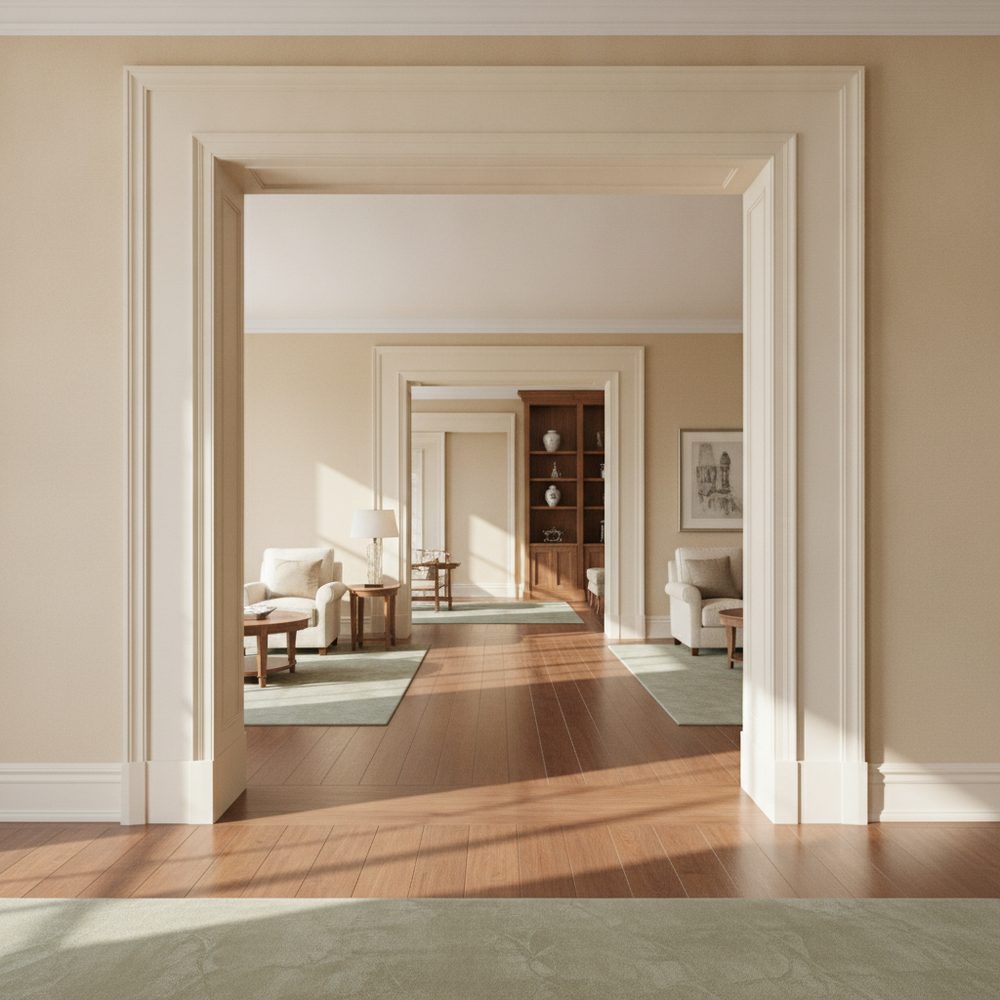
36-inch widened doorway with flush zero-step threshold — universal design home modification by Live Oak Home Access in Central Texas
CAPS-Certified · Licensed & Insured

Is this the right time for doorway widening?

You don't have to wait for a crisis. These are the situations where our clients — and their families — tell us they wish they had acted sooner.

After a fall or a close call

A fall often reveals the first sign of a larger pattern. If grabbing the doorframe for balance has become habit, or if shuffling sideways through a narrow opening is now routine, the doorway itself is the hazard. We remove it.

Following a stroke or new diagnosis

Sudden changes in mobility — weakness on one side, foot drop, difficulty turning — make standard 30-inch doorways feel impassable. After a stroke or a Parkinson's diagnosis, many people are sent home from rehab with a wheelchair or walker and a house that wasn't designed for it. We can usually schedule an assessment within days.

Wheelchair or power scooter use

Standard interior doors leave a clear opening of 27 to 29 inches after the door and hardware are accounted for. A standard manual wheelchair needs at least 32 inches. Power chairs often need 36 to 42 inches. If you can only reach certain rooms, that is not independence. We make every room in your home reachable.

Walker or rollator users

A rollator with a seat is wider than most people expect. If you're turning the walker sideways to squeeze through, or if you're choosing not to use your walker because it won't fit, you're taking a risk. Proper doorway width lets you use your equipment everywhere it belongs.

Balance challenges and Parkinson's disease

People managing Parkinson's often experience freezing episodes at doorways — a documented neurological phenomenon where the visual "frame" triggers a gait block. Wider openings and contrasting flooring colors on either side can meaningfully reduce freezing. Our OT-informed design process accounts for this specifically.

Planning ahead — before the need is urgent

The most common thing clients tell us after the project is finished: "I wish we'd done this five years ago." Widening doorways before a mobility change is easier, less disruptive, and often less expensive than retrofitting in an emergency. Our aging-in-place home safety checklist helps you identify which modifications make the most sense to tackle first.

Step at the front door — or any door

One step is all it takes to make an entry inaccessible for a wheelchair and a genuine fall hazard for anyone with impaired balance. A zero-step entry changes the entire equation. You walk or roll straight in — no mental calculation about footing, no fear of catching a toe, no need for someone to spot you.

Adult children helping aging parents

Many of our calls come from adult children who live nearby and are watching a parent adapt to a changing situation in real time. If your mother is using the walls for support through hallways, or your father's new wheelchair doesn't fit through his bedroom door, we can help you turn a stressful situation into a solved one. We work around your parents' schedule and keep them comfortable throughout the process.

Returning home after a hospital stay

Hospitals and rehab facilities often discharge patients with a list of recommended home modifications. Doorway widening and no-step entries are frequently on that list. We work quickly and can often complete single-door projects within a week of your call, so your family member can come home to a house that's ready for them.

What we install and how we do it

Every doorway widening or zero-step entry is custom-built to your home. Here is what the options look like in practice.

Doorway widening — interior

We remove the existing door frame and enough of the surrounding wall to reach your target clear opening — typically 36 inches for most wheelchairs, sometimes wider for power chairs. If the wall is load-bearing we install a properly sized header beam first. Then we re-frame, hang new drywall, tape and texture to match your existing walls, paint, and install new trim. The finished opening looks intentional, not like a retrofit.
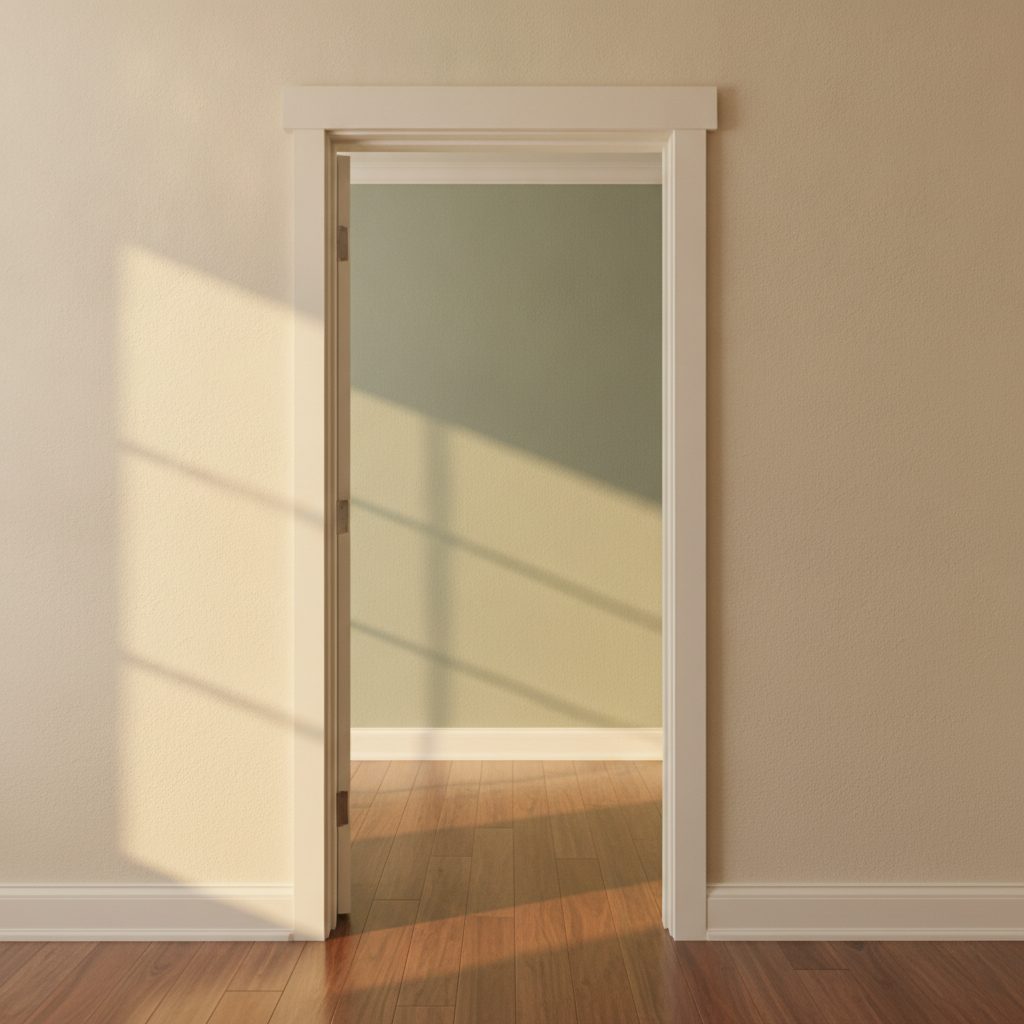
Most popular choice for bedrooms, bathrooms & hallways

Zero-step / no-step entry construction

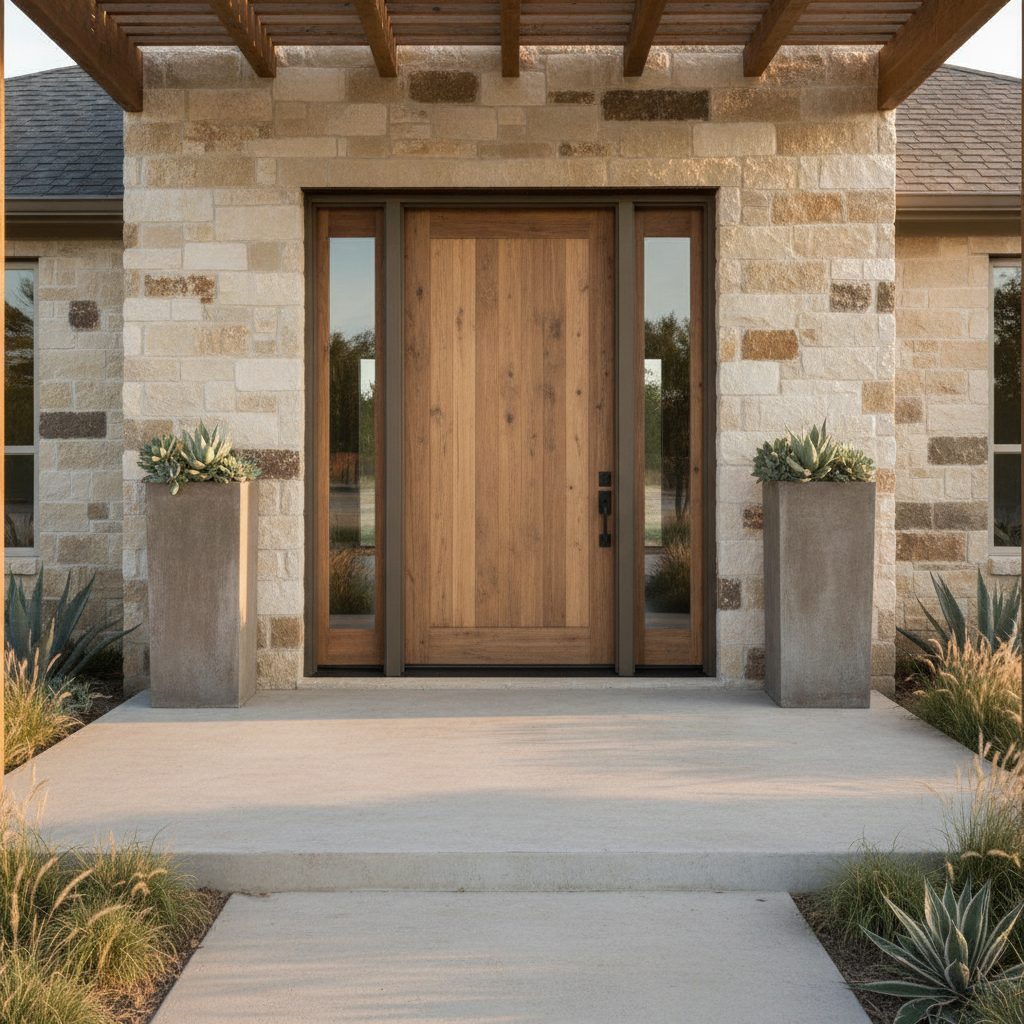
A true no-step entry means the exterior grade, landing, and threshold all meet at the same level — no step up, no step down. We evaluate the exterior grade, determine the correct drainage approach, and construct a flush landing in concrete, pavers, or composite materials. The threshold is set at or just barely above grade to keep water out while keeping the entry fully passable. When the grade change is larger than a no-step entry can accommodate, a properly sloped wheelchair ramp is the right companion. This is the gold standard for exterior accessibility.

Recommended for all primary entries

Threshold ramps

When the existing door threshold has a lip of an inch or two and a full no-step entry isn't needed, a threshold ramp is a clean, fast solution. We install beveled aluminum or rubber threshold ramps that are ADA-compliant, secured firmly to the floor, and finished in a color that doesn't create a visual trip hazard. They require no permanent construction and are a good bridge solution while you plan a larger project.

Ideal for sliding doors, patio doors & minor lips

Offset door hinges

A set of offset (swing-clear) hinges can add up to two inches of clear opening to an existing door with no framing work at all. If your current door is 30 inches wide and you need 32, offset hinges may be the entire solution — same door, same frame, meaningfully more room. We assess this option first because it's the fastest and least invasive path to more width.

Low-cost first option when the gap is small

Pocket doors and barn doors

Swinging doors eat into the usable floor space near doorways, which matters when you're maneuvering a wheelchair. We can convert existing hinged doors to pocket doors (which slide into the wall) or surface-mounted barn-style doors (which slide along the wall). Both options reclaim floor space and make entries dramatically easier to use from a wheelchair or rollator.

Great for tight hallways and bathrooms

Whole-home accessibility assessment

Most clients benefit from looking at the entire home at once. A single assessment visit lets us map every doorway, identify exterior entry concerns, and prioritize changes that give you the most independence for the investment. We pair doorway widening recommendations with related modifications — like an accessible bathroom remodel — to create a unified, livable space rather than a series of disconnected fixes.

Best starting point for new clients
A widened 36-inch accessible interior doorway with a flush threshold for wheelchairs and walkers

Our process, start to finish

We keep the process simple and transparent. No surprises, no pressure, no mess left behind.

  1. 1

    Free in-home assessment

    We come to your home — or your parents' home — and measure every doorway, examine each exterior entry, and discuss your mobility equipment, current needs, and goals for the future. We talk through all the options, answer your questions, and take notes on anything that might affect the project: wall construction, flooring transitions, drainage at exterior entries.

  2. 2

    Fixed written quote

    Within a day or two of the assessment, you receive a written quote with a firm price for the agreed scope — no hourly estimates, no "it depends" vagueness. You decide which items to move forward with and in what order. There is no obligation and no pressure.

  3. 3

    Clean, professional installation

    Our crew protects your floors with drop cloths and ram board before any work begins. For doorway widening, we sequence the work to minimize dust and noise: framing and structural work first, then drywall and finish work. For exterior zero-step entries, we keep temporary access available throughout the project whenever possible. We treat your home with the same care we'd want in our own.

  4. 4

    Daily cleanup — every day

    Construction dust and debris don't linger overnight. We clean up at the end of every work day so your home stays livable and your floors stay protected. If your project runs multiple days, you won't be navigating a construction zone each morning.

  5. 5

    Walkthrough and warranty

    When the work is done, we walk through every item with you — or with your adult child or caregiver, whoever you'd like present. We demonstrate the completed openings, confirm every transition is smooth, and answer any final questions. All our work comes with a written workmanship warranty. If anything isn't right, we come back and make it right.

Typical cost ranges in Central Texas

Costs vary based on doorway width, wall construction, whether any load-bearing framing is involved, finish materials, and the scope of exterior work. These are typical Central Texas ranges — a free in-home assessment gives you an exact written quote for your home.

Typical project ranges — Central Texas (verify current pricing with a free assessment)
Project type Typical range Notes
Offset (swing-clear) hinges Lowest cost option No framing — gains up to 2 in. of clear opening
Threshold ramp (aluminum/rubber) Low cost, installed same day For lips up to ~2 in.; no permanent construction
Single interior doorway widening Mid range Higher end if load-bearing wall header required
Multiple interior doorways Mid to upper range Bulk pricing often available for 3+ openings
Zero-step / no-step exterior entry Varies by grade change and materials Concrete, composite, or paver landing options
Pocket or barn door conversion Mid range per door Includes hardware; pocket doors require wall work

For more detail on what affects your total, see our Central Texas home modification cost guide. All pricing is confirmed in writing before any work begins.

Help paying for doorway widening

Several programs may help offset the cost of doorway widening and zero-step entry work. Eligibility and benefit amounts vary — we help you navigate the paperwork.

  • VA HISA grant: Veterans and surviving spouses may qualify for the VA Home Improvement and Structural Alterations grant, which covers medically necessary accessibility modifications including doorway widening and no-step entries. Verify current VA figures and eligibility requirements directly with the VA.
  • Texas Medicaid STAR+PLUS HCBS waiver: Qualifying Texas Medicaid members may receive funding for Minor Home Modifications. Doorway widening often qualifies. Ask your STAR+PLUS service coordinator.
  • Medicare Advantage plans: Original Medicare generally does not pay for home modifications. However, some Medicare Advantage plans offer limited home-safety benefits — verify with your specific plan.
  • Nonprofit and local assistance programs: Several Central Texas nonprofits and county aging services agencies offer home repair assistance for low-income seniors. We can point you toward current programs in your area.

We help with paperwork; this is not medical, legal, or financial advice — verify current program details with each agency. See our full Texas home modification funding guide for more detail.

Our work across Central Texas

Each project is different. These are the kinds of results we achieve for our clients throughout Austin, the Hill Country, and surrounding communities.

A completed zero-step exterior entry with a flush concrete landing and matching stonework at a Hill Country home

A home built for right now — and for later

We often hear from clients that they want to age in place but aren't sure where to start. Doorway widening and a zero-step front entry are almost always near the top of the list because they affect every single room in the house, every single day. Once those barriers are gone, other modifications — like adding grab bars and bath safety features or building a wheelchair ramp for the garage — build naturally on that foundation.

We think about your home as a system. A narrow doorway and a high threshold don't just affect one room — they affect where you can go, what you can do, and how safe you feel in your own house. Our OT-informed design approach means we consider traffic flow, turning radii, contrast and lighting, and long-term function — not just the opening width on a spec sheet.

We're a family-owned company based in Dripping Springs, and the vast majority of our clients are neighbors — people who live in the same communities we do. That matters to how we work. We are not a national franchise. We are people who care about the outcome.

Why families in Central Texas choose us

CAPS-certified aging-in-place specialist

The Certified Aging in Place Specialist credential from NAHB means Michael Chandler has completed specialized training in the technical, business, and customer-service aspects of home modifications for older adults. It's a credential that requires ongoing education to maintain — not a one-time certificate.

OT-informed design

We collaborate with occupational therapists and incorporate OT principles into our assessments. That means your modifications are designed around how you actually move, not around a standard specification. We account for freezing episodes in Parkinson's, one-sided weakness after stroke, turning radius for your specific chair, and dozens of other real-world functional considerations.

Licensed, insured & EPA Lead-Safe

We carry full contractor licensing and insurance — protecting you and your home throughout the project. Our EPA Lead-Safe certification matters in older Central Texas homes where lead paint may be present in woodwork and trim. We follow safe work practices so you don't trade one health concern for another.

Family-owned, locally rooted

We are based in Dripping Springs and serve communities across the Austin metro, the Hill Country, and Central Texas. Our clients are our neighbors, and word-of-mouth is how we grow. We have every reason to do the work well and treat every family with respect.

Written workmanship warranty

Every project comes with a written warranty on our workmanship. If something isn't right after we leave, we come back and fix it. No runaround, no extra charge.

We protect your home and clean up daily

Floor protection goes down before any tool comes out. Construction debris is removed the same day it's created. We understand that the person living in this home isn't on a construction site — they're at home — and we act accordingly every day of the project.

Related services and guides

Doorway widening is often one part of a broader accessibility plan. These services and resources pair naturally with it.

Wheelchair ramps

When the exterior grade change is too large for a zero-step entry alone, a properly sloped modular or concrete ramp gives you safe, independent access. We design ramps that meet ADA slope guidelines and complement your home's exterior.

Accessible bathroom remodel

The bathroom is usually the highest-priority room for accessibility. A wider bathroom doorway pairs directly with a curbless shower, comfort-height toilet, and well-placed grab bars to create a bathroom you can use safely and independently.

Aging-in-place home safety checklist

Our room-by-room guide helps you identify which modifications matter most for your situation. Download it before your assessment appointment to make your conversation with our team more productive.

Serving Georgetown, Sun City, Lakeway, Canyon Lake, Marble Falls, Kerrville, New Braunfels, and communities across the Austin metro, the Hill Country, and Central Texas. See all service areas.

Common questions about doorway widening, zero-step entries, and no-step entry construction

How wide does a doorway need to be for a wheelchair?

ADA guidelines call for a clear opening of at least 32 inches, with 36 inches recommended for easier maneuvering. Power wheelchairs and wider manual chairs may need 38 to 42 inches of clear opening. We measure your specific equipment during the free in-home assessment so every opening fits your chair, not just a standard number.

What is a zero-step entry and why does it matter?

A zero-step entry — also called a no-step entry — means you can walk or roll from outside straight onto your floor level with no step, stair, or lip to cross. Even a single two-inch step is a major fall hazard for someone using a walker or cane, and it is impassable for most wheelchairs without a ramp. Creating a true zero-step entry typically involves grading the exterior, raising a concrete threshold, building a sloped landing, or a combination of all three.

Will widening a doorway damage my home's structure?

Most interior doorways are not load-bearing walls, so widening them is straightforward. When a wall does carry structural load, we install a properly sized header beam to transfer that load safely before we remove any framing. Our licensed crew handles the framing, drywall patching, and painting so the finished opening looks like it was always there.

How long does doorway widening take?

A single doorway typically takes one to two days: framing and header work on day one, drywall, texture, and paint on day two. A whole-home project covering multiple openings usually runs three to five days depending on the number of doors and whether any openings are in load-bearing walls. We give you a firm schedule before work begins and we clean up each day so your home stays livable throughout.

Can I get help paying for doorway widening?

Possibly yes. The VA HISA grant helps eligible veterans and surviving spouses pay for medically necessary accessibility modifications including doorway widening — verify current VA figures and eligibility requirements. Texas Medicaid's STAR+PLUS HCBS waiver can cover Minor Home Modifications for qualifying members. Some Medicare Advantage plans offer limited home-safety benefits; check your specific plan. We help with paperwork, but this is not medical, legal, or financial advice — verify current program details with each agency.

What is a threshold ramp and when do I need one instead of a full zero-step entry?

A threshold ramp is a small, low-profile wedge — usually aluminum or rubber — that spans a door threshold lip of up to about two inches. It is a fast, affordable solution when the main entry is already close to grade and only a small lip stands in the way. When the height difference is larger — say four inches or more — a full no-step entry with grading and a concrete or composite landing is the safer, more durable solution. We assess your specific situation and recommend the right fit.

Do you widen doorways near me in Austin, Georgetown, or the Hill Country?

Yes. We serve homeowners throughout the Austin metro, the Hill Country, and surrounding Central Texas communities — including Georgetown, Sun City, Lakeway, Lake Travis, Dripping Springs, Wimberley, Canyon Lake, New Braunfels, Marble Falls, Fredericksburg, Bastrop, and Seguin. If you're unsure whether your area is covered, call or text (512) 797-6518 and we'll confirm right away. We come to you for the free in-home assessment — no trip to an office or showroom required.

What is universal design and how is it different from ADA accessibility?

ADA (Americans with Disabilities Act) standards set the legal minimum requirements for public and commercial buildings — 32-inch clear door openings, maximum ramp slopes, and so on. Universal design goes further: it's an approach to building and remodeling that makes spaces work comfortably for people of all ages and abilities, not just those with a current disability. A universal design home typically has 36-inch doorways (wider than the ADA minimum), zero-step entries at all exterior doors, lever door handles, and open floor plans that allow easy movement for wheelchair users and able-bodied visitors alike. The practical benefit: modifications made to universal design standards tend to add lasting home value and don't look like medical equipment. They look like a well-designed home.

Ready to open up your home?

A free in-home assessment is the best place to start. We come to you, measure your doorways and entries, talk through your options, and leave you with a clear written quote — no pressure, no obligation. Most clients tell us the conversation alone was worth the call.

You can also text us at (512) 797-6518 — whichever is easier for you.