

Home Safety Checklist for Seniors — Room by Room
Walk through your home — or your parents' home — with this free, printable checklist for aging-in-place home modifications. It covers every major area where a fall or accident can happen. Work through it once, note what needs attention, then decide what you can fix yourself and what needs a professional.
By Drew Chandler — Home Accessibility & Project Coordination · Updated 2026-08-15
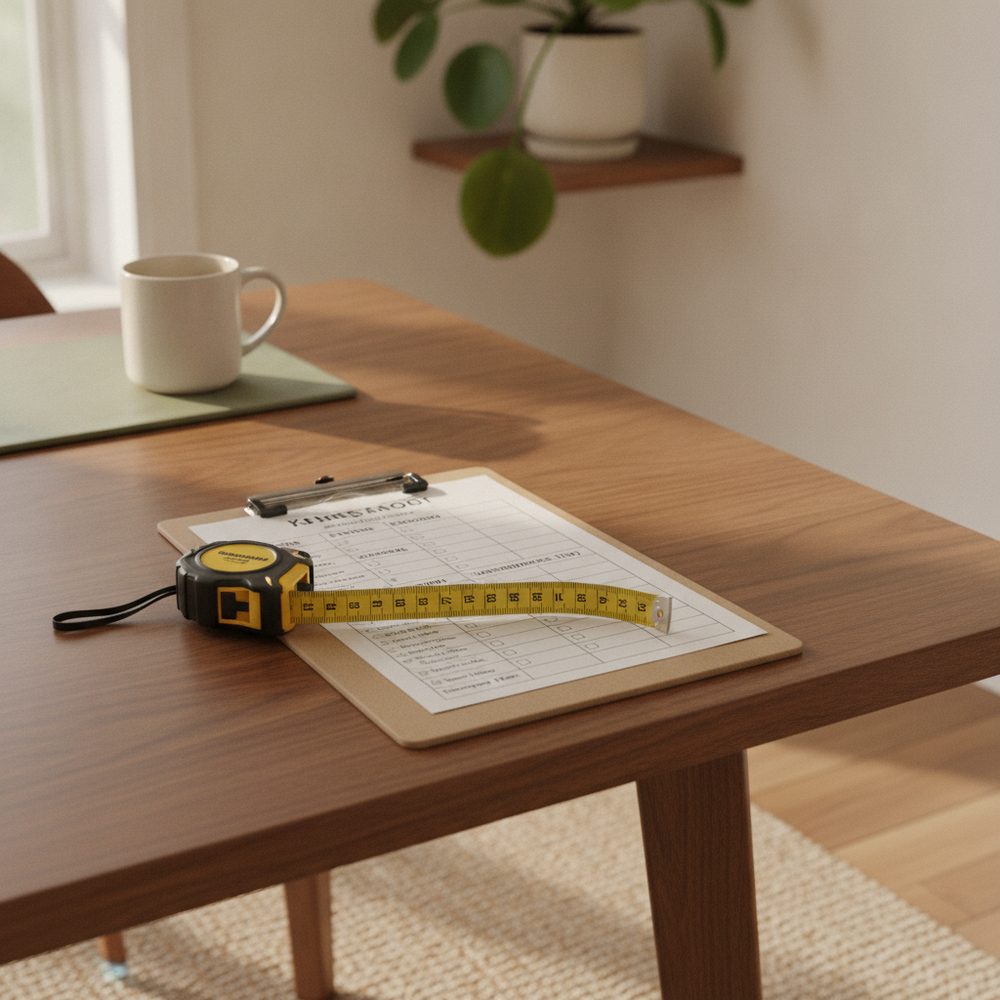
Review the routes and tasks that are difficult for the person, including bathrooms, stairs, entrances and nighttime paths. A clinician can assess individual fall risk; a home walk-through identifies environmental hazards and possible changes. CDC STEADI explains how home safety fits into a broader fall-prevention approach.
Print this checklist. Walk room to room. Check off what is already safe. Circle what needs work. Then request a free in-home safety assessment and we will review everything with you in person — no obligation.
What Is a Professional Home Safety Assessment in Central Texas?
A professional home safety assessment in Central Texas is an in-person, room-by-room evaluation by a home-accessibility specialist — the same areas covered in this checklist, but reviewed by a trained eye that catches hazards families often miss. You receive a written, prioritized report of recommended modifications with typical Central Texas cost ranges. Live Oak Home Access provides this as a free, no-obligation whole-home accessibility assessment for Austin, the Hill Country, and Central Texas.
This printable checklist is designed so you can do a first pass yourself. A professional assessment goes further: a home-accessibility specialist measures doorway widths and step heights, checks for grab-bar blocking behind walls, and applies occupational-therapy-informed judgment to how your specific mobility needs match your home's layout — details that are easy to miss working from a checklist alone. Most in-home assessments take 60 to 90 minutes and result in a written, prioritized plan you can act on at your own pace, with no obligation to hire us and no doctor's referral required.
Why This Checklist Matters for Fall Prevention
Most people who have a fall at home did not see it coming. The rug that was fine for thirty years becomes a hazard when your balance shifts. The lighting that felt bright enough looks different to eyes that need more contrast. The tub that was easy to step over becomes a cliff when arthritis or a recent surgery changes your range of motion. The CDC reports that more than 1 in 4 adults 65 and older falls each year, and that falls send about 3 million older adults to the emergency department annually — with the bathroom the most common location for a fall inside the home. Falling once roughly doubles the chance of falling again, which is exactly why this checklist front-loads the bathroom and stairs. For the full research picture, see our Texas senior fall statistics and aging-in-place data.
The good news: most home hazards are fixable. Some take five minutes and cost nothing. Others take a few days and a modest budget. A few — like removing a high-threshold tub or installing a residential elevator — are bigger projects. But every item on this list represents something that can be improved, and improvement directly reduces the chance of a fall. If you want a trained specialist to do a whole-home accessibility assessment alongside this checklist, that is the most thorough starting point.
This checklist is organized the way most people actually move through a home: arriving at the front door, moving to the bathroom, then through the bedroom and kitchen, up and down the stairs, and finally reviewing the floors and lighting as a whole.
How to Use This Checklist
Go room by room with a pen and paper — or print this page. For each item, mark one of three things:
- Safe — no action needed right now.
- DIY fix — something you or a family member can address without a contractor.
- Needs a pro — structural work, electrical, or anything where doing it wrong creates a new hazard.
Do not try to evaluate everything in a single pass. Take your time. Sit in your parent's usual chair and look at the room from their eye level. Notice where they reach, where they hold on, where they hesitate.
Entry & Exterior
This is where arriving home and leaving home happen. A step at the front door, an uneven walkway, or a dark porch are among the most common causes of entry-related falls.
| Item to check | What to look for | Common fix |
|---|---|---|
| Steps at entry | One or more steps to reach the front or garage door | Threshold ramp, modular ramp system, or permanent wheelchair ramp |
| Handrail at steps | No rail, or rail that wobbles under pressure | Install graspable handrail on at least one side; both sides if possible |
| Porch or stoop lighting | Arriving after dark is difficult to navigate safely | Motion-activated exterior light; ensure bulb is bright enough |
| Walkway surface | Cracked concrete, uneven pavers, moss or mildew on path | Patch cracks; replace uneven pavers; treat slippery surfaces |
| Door threshold | Raised threshold creates a trip hazard at entry | Beveled threshold cover or threshold ramp |
| Door hardware | Round knobs are hard with arthritis or limited grip | Replace with lever-style door handles throughout |
| Keypad or smart lock | Fumbling with keys on a dark porch is a fall risk | Keypad entry or smart lock accessible without small key |
| Doorway width | Less than 32 inches clear; needed now or in future for mobility aids | Doorway widening project; typical Central Texas ranges — free assessment for exact quote |
Bathroom
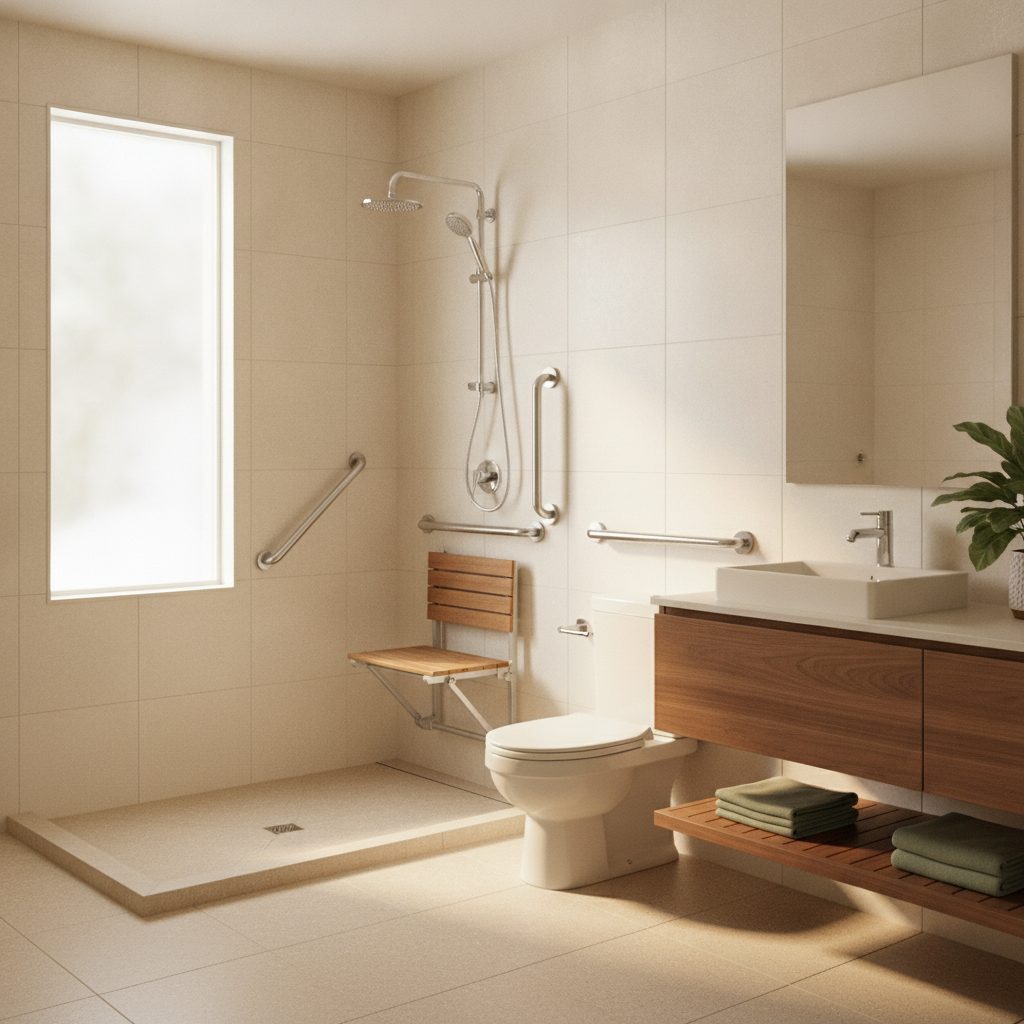
The bathroom is the highest-risk room in most homes. Wet surfaces, high tub thresholds, and the physical demands of bathing and toileting create a concentrated set of hazards. If you only address one room today, make it this one.
Toilet Area
| Item to check | What to look for | Common fix |
|---|---|---|
| Toilet seat height | Standard toilets at 15 inches are too low for most older adults; difficult to rise from | Raised toilet seat riser (temporary) or replace with an ADA/comfort-height toilet at 17–19 inches |
| Grab bar at toilet | Nothing to hold when sitting or rising | Wall-mounted grab bar on the side wall or a flip-down bar — must anchor into studs or use proper toggle/toggle-bolt rated hardware |
| Toilet paper placement | Reaching backward or twisting to reach roll | Relocate holder to front side wall within easy reach without twisting |
| Floor mat at toilet | Loose bath mat slides on tile | Remove loose mat or use non-slip mat with suction backing; verify it stays flat |
Shower and Tub
| Item to check | What to look for | Common fix |
|---|---|---|
| Tub entry threshold | Standard tub wall 14–18 inches high; must be stepped over wet | Tub transfer bench (temporary); tub cut-out insert; or tub-to-shower conversion for a permanent curbless or low-threshold shower |
| Shower grab bar(s) | Nothing to hold entering, bathing, or exiting | Grab bars at entry, on the back wall at standing height, and a vertical bar at entry — anchored into studs |
| Shower seat | Standing through a full shower is unsafe or exhausting | Fold-down wall-mounted bench or removable shower chair |
| Non-slip surface | Smooth tub or shower floor; standing on slick ceramic or fiberglass when wet | Non-slip appliques or mat inside tub/shower; or replace floor with slip-resistant tile |
| Handheld showerhead | Fixed showerhead requires standing under spray to bathe; awkward when seated | Install handheld showerhead on slide bar — allows seated bathing and easy rinsing |
| Shower controls reachable | Controls at far end of shower; must reach past spray to adjust temperature | Offset valve or thermostatic valve allows pre-setting temperature before entering |
| Curb or threshold height | Any curb creates a step-over hazard; standard curbs are 2–4 inches | Curbless/roll-in shower conversion; linear drain allows zero-barrier entry |
Our team specializes in converting standard tub-and-tile bathrooms into fully accessible roll-in showers and installing properly anchored grab bars for bathroom safety that meet ADA load requirements. A grab bar that pulls out of the wall is worse than no bar at all — installation method matters enormously.
Bathroom General
- Light switch reachable from doorway without reaching around the door frame in the dark.
- Nightlight or motion-sensing light for nighttime trips to the bathroom.
- Bathroom door swings outward or is a pocket/barn door — so it can be opened from outside if someone falls against it.
- Adequate ventilation to reduce condensation and slippery surfaces.
- Cabinet handles are lever or D-ring style, not small knobs.
- Medicines stored at reachable height — not requiring a step stool.
Bedroom
The bedroom matters most at night and in the early morning — when lighting is low, balance is most affected by grogginess, and the distance to the bathroom is a risk if it requires navigating a dark hallway.
| Item to check | What to look for | Common fix |
|---|---|---|
| Bed height | Too low (below knee height) makes rising difficult; too high requires a step or jump | Adjustable bed frame, bed risers (if too low), or replacement mattress/frame at correct height — aim for knee height when seated |
| Bedside lighting | Must get up and cross room to turn off overhead light before sleeping | Bedside lamp with easy-reach switch; or smart bulb controlled by voice or bedside remote |
| Path to bathroom | Furniture, cords, or objects in nighttime path to bathroom | Clear path of at least 36 inches; add nightlights along hallway |
| Nightstand stability | Lightweight or wheeled nightstand used as a support point to rise | Heavy, stable nightstand or a bed rail assist handle |
| Bedroom on main level | Bedroom on second floor; stairs required at night | Main-level bedroom conversion or stair lift if stairs cannot be avoided |
| Closet access | Frequently used items on high shelves or floor level | Relocate daily-use items to waist-height; closet organizer that eliminates bending and reaching overhead |
| Emergency communication | Phone not reachable from bed or floor | Phone kept on nightstand; consider medical alert device |
Kitchen
The kitchen involves reaching, bending, lifting, and standing for extended periods — all of which become more difficult with age or after an injury. Most kitchen fixes are organizational rather than structural.
| Item to check | What to look for | Common fix |
|---|---|---|
| Frequently used items | Everyday dishes, glasses, and appliances stored above shoulder height or below knee height | Reorganize so most-used items are between waist and shoulder height |
| Step stool use | Any reliance on a step stool for daily tasks | Reorganize storage to eliminate need; if stool is unavoidable, use a non-slip stool with a handrail |
| Counter height | Counters too high for seated prep if using a wheelchair or rollator | Pull-out work surfaces or lowered counter section at accessible height |
| Faucet handles | Round knobs on kitchen faucet are hard to grip with arthritis | Lever-handle or touch/sensor faucet |
| Stove controls | Controls at rear of range require reaching over burners | Front- or side-control range; induction cooktop with no open flame |
| Microwave placement | Over-range microwave requires lifting heavy dishes at head height | Countertop microwave at accessible height |
| Rugs at sink | Loose kitchen mat in front of sink slides on hard floor | Remove or replace with non-slip anti-fatigue mat secured with grip backing |
| Under-cabinet lighting | Counter work area poorly lit; shadows over cutting area | LED under-cabinet strip lights — inexpensive and easy to install |
Stairs (Interior)
Stairs are the leading location for serious fall injuries requiring hospitalization in older adults. If your home has interior stairs and your parent uses them daily, this section deserves careful attention.
| Item to check | What to look for | Common fix |
|---|---|---|
| Handrails — both sides | Rail on one side only; no rail at all; rail too low or too high; rail diameter hard to grip | Add rail to open side; replace flat or decorative rail with graspable 1.25–2-inch round rail |
| Handrail length | Rail starts at second step rather than at top landing; ends before bottom step | Extend rail to begin and end at the walking surface, not just at the top and bottom step |
| Stair lighting | Stairway not lit independently; must climb in dim ambient light | Dedicated stair lighting with switches at top and bottom; motion-sensing stair lights for nighttime |
| Stair tread surface | Carpet worn or loose; hardwood treads slippery; no visual contrast between steps | Replace worn carpet; add non-slip stair treads; high-contrast nosing strip to define each step edge |
| Objects on stairs | Items left on steps to "carry up later" | Zero tolerance policy for objects on stairs; use a basket at the base as staging area, cleared immediately |
| Stair lift | Parent avoids using stairs; bedroom or laundry inaccessible; history of near-miss on stairs | Stair lift evaluation — most straight staircases can be fitted; curved rails available for most configurations |
Floors Throughout the Home
Floor hazards are everywhere and easy to overlook because you walk past them every day. A few targeted changes here can cut trip risk significantly.
- Throw rugs and runners. These are the single most common floor hazard. Loose rugs bunch, curl at edges, and slide. The safest fix is to remove them entirely. If a rug stays, it must have non-slip backing AND be taped or tacked at every edge — inspect it monthly.
- Transition strips between flooring types. A raised edge where tile meets hardwood, or hardwood meets carpet, is a trip hazard. Flush or beveled transition strips eliminate this.
- Electrical and lamp cords. Any cord crossing a pathway should be routed along baseboards and secured with cable clips.
- Furniture placement. Clear pathways of at least 36 inches width throughout the home, ideally 42–48 inches if a walker or wheelchair may be used.
- Pet items. Water bowls, food dishes, and pet beds placed in traffic areas are a common unnoticed hazard.
- Clutter near doors. Shoes, bags, and other items stacked near entry and interior doors narrow the pathway and create a landing obstacle.
- Floor finish. High-gloss hard floors look bright but can create visual confusion about surface level and become very slippery when wet. Matte-finish or textured hard flooring is safer.
Lighting Throughout the Home
Eyes change significantly with age. By 70, most people need two to three times more light than they did at 20 to see the same level of detail — and glare becomes a bigger problem at the same time. Good lighting is not just about adding brighter bulbs; it is about reducing glare, eliminating dark spots, and making sure transitions between light and dark areas are gradual.
- Hallway lighting. Every hallway should be lit at all times of day, especially between the bedroom and bathroom. Motion-sensing nightlights plug into outlets every six to eight feet.
- Stair lighting. Already covered above — but worth repeating. Poorly lit stairs are one of the most dangerous conditions in the home.
- Light switch placement. You should be able to turn on a room's light before entering the room. If the switch is inside and you must enter the dark room first, a smart switch or wireless remote switch can solve this without rewiring.
- Nightlights in bathroom. A motion-sensing nightlight in the bathroom means you never have to turn on a harsh overhead light during a 2 a.m. trip.
- Under-counter and task lighting. Kitchen counters and work surfaces benefit from direct light that is not affected by shadows from overhead cabinets.
- Outdoor lighting. Motion-activated lights at the driveway, garage door, and all entries mean arriving home after dark is never a navigation challenge.
- Glare control. Use frosted or covered bulbs rather than bare bulbs. Lamp shades diffuse light. Avoid placing a bright lamp directly across from a window.
- Consistent color temperature. Mixing warm and cool bulbs in the same space can be disorienting. Stick to one color temperature (warm white, around 2700–3000K, tends to be most comfortable and less glare-inducing).
Garage and Laundry
These areas often get overlooked in a safety review. They typically have hard concrete floors, poor lighting, and cluttered storage that pushes through-traffic into narrow paths.
- Garage floor should be clear of oil, water, and debris — all significantly increase slip risk on concrete.
- Laundry appliances at accessible height — front-loading washer and dryer on pedestals eliminates deep bending.
- Laundry basket management — carrying a heavy laundry basket down stairs is a significant fall risk; consider a laundry chute, a second laundry set on the main level, or a laundry service schedule that avoids trips.
- Step from garage into house — often a two- to three-inch step; a beveled threshold or small ramp insert addresses this.
- Garage door opener — reachable and functional; a keypad entry eliminates the need to find a key outside.
What This Checklist Does Not Replace
A printed checklist gives you a starting point and helps you have a conversation with family. It does not replace a trained eye. A whole-home accessibility assessment by a home-accessibility specialist goes deeper: we assess how your parent actually moves through the space, look at grab bar anchor points behind the wall, evaluate door widths for specific mobility equipment, and prioritize modifications by urgency and budget.
We also bring an person-centered design perspective — understanding not just what is structurally possible, but what will actually make daily routines easier and more dignified for the person who lives there. That is a different skill set from a general contractor, and it makes a real difference in the final result.
A note on funding. Original Medicare generally does not cover grab bars, ramps, walk-in tubs, or stair lifts. Some Medicare Advantage plans offer limited home-safety or home-modification benefits — check your specific plan. The VA HISA grant helps veterans with medically necessary modifications (verify current VA figures). Texas Medicaid STAR+PLUS HCBS waiver may cover Minor Home Modifications for eligible enrollees. We help our clients navigate the paperwork for programs they may qualify for. We are not medical, legal, or financial advisors — verify current program details with the relevant agency before making decisions based on funding availability. See our full funding guide for Central Texas for a program-by-program overview.
Prioritizing Your To-Do List
After you complete the checklist, you will likely have a mix of items. Here is a practical way to sort them:
-
Fix today at no cost
Remove throw rugs. Clear pathways. Move frequently needed items to reachable shelves. Plug in nightlights. Move a phone to the nightstand. These take minutes and reduce risk immediately.
-
Fix this week, low cost
Replace round door and faucet knobs with lever handles. Add motion-sensing nightlights in the hallway and bathroom. Install non-slip strips on stair treads. Buy a non-slip mat for the shower. Replace bulbs with higher-output, same-color-temperature LED bulbs.
-
Schedule a professional assessment
Get a licensed contractor to evaluate grab bar placement, doorway widths, ramp feasibility, and any structural or electrical work. A home-accessibility specialist will also help you sequence larger projects by impact and budget. Call us at (512) 222-8834 or request your free in-home assessment online.
-
Plan larger modifications
Tub-to-shower conversions, ramps, stair lifts, doorway widening, and bathroom remodels take planning, permits (where required), and budget. Starting this conversation now — before a fall or a hospital discharge — gives you more time to make good decisions and explore funding options.
A Note on Timing
The most common time families contact us is right after a fall or after a hospital discharge — when urgency is high and options feel limited. We completely understand that; we are glad to help at any stage. But the families who have the best outcomes are the ones who start the conversation early, before a crisis.
If your parent is in their early 70s and living independently now, a walkthrough today — even if nothing immediately urgent comes up — gives you a baseline and a relationship with a contractor who knows the house. When needs change, as they inevitably do, you are not starting from scratch.
If you are the adult child reading this from a distance, this checklist gives you a structured way to have a conversation the next time you visit. Go through it together. It is far less fraught than saying "Mom, I'm worried about you" out of nowhere — it is just a home project you are doing together.
Frequently Asked Questions
What is the single most important room to address first for aging-in-place safety?
Start with the person’s difficult tasks and the hazards that need prompt attention. Bathrooms, stairs, entrances and nighttime routes all deserve review. A clinician can assess individual fall risk; a home walk-through identifies environmental hazards and possible changes.
Do I need a contractor for all of these checklist items?
Not for all of them. Removing throw rugs, rearranging furniture for clear pathways, adding nightlights, and raising toilet seat risers are things most families can handle on their own. Items like structural grab bars, ramps, stair lifts, and doorway widening should be done by a licensed contractor who understands load paths and building codes. A home-accessibility specialist can tell you which is which.
Does Medicare pay for home safety modifications?
Original Medicare generally does not cover grab bars, ramps, walk-in tubs, or stair lifts. Some Medicare Advantage plans offer limited home-safety or home-modification benefits — check your specific plan. The VA HISA grant helps veterans with medically necessary modifications (verify current VA figures). Texas Medicaid STAR+PLUS HCBS waiver may cover Minor Home Modifications for eligible enrollees. We help with the paperwork, but this is not medical, legal, or financial advice — verify current program details with the relevant agency.
How wide do doorways need to be for a wheelchair?
A standard wheelchair needs a clear opening of at least 32 inches, and 36 inches is strongly preferred to allow comfortable passage without scraping hands. Most interior doors in older Texas homes are 28–30 inches wide and need to be widened. Pocket doors or barn-style offset hinges can sometimes add 2 inches without full framing work.
How do I know if my parent's home needs a professional safety assessment?
A good rule of thumb: if you notice a near-miss fall, if your parent is using walls or furniture to steady themselves, if they avoid certain rooms, or if they have a new diagnosis affecting balance or mobility, it is time for a professional assessment. A home-accessibility specialist or occupational therapist can identify hazards you might not see because you are used to the space. A free in-home safety assessment from Live Oak Home Access is a no-obligation starting point.
What is included in a professional home safety assessment in Central Texas?
A professional home safety assessment covers every room — bathrooms, bedroom, kitchen, entryways, garage, and stairs — checking lighting, floor surfaces, doorway widths, grab-bar locations, and step heights against your specific mobility needs. You receive a written report with a prioritized list of recommended modifications and typical Central Texas cost ranges. Live Oak Home Access provides this whole-home accessibility assessment free, with no obligation and no doctor's referral required.
What is the fastest way to reduce fall risk in the home?
The fastest wins are: remove or secure all throw rugs and runners; add grab bars at the toilet and in the shower; improve lighting in hallways and stairways (add motion-sensing nightlights); clear pathways of cords and clutter; and move frequently used items to reachable shelves so your parent is not climbing or bending dangerously. These steps can be taken within a day or two and meaningfully reduce risk.
Not sure how you’d pay for it? Find out in minutes — free
Complete the free Funding Check for a preliminary list of programs to review and official sources. Review the preliminary map with our team before making a funding or construction decision. Each program decides eligibility and approval; there is no obligation to buy.
Ready for a Professional Home Safety Assessment?
This checklist is a starting point. A free in-home safety assessment for seniors from our home-accessibility team gives you a personalized, prioritized plan — with no obligation and no pressure. We serve Austin, Dripping Springs, San Marcos, Georgetown, New Braunfels, Marble Falls, Kerrville, and the surrounding Hill Country.
Clear Written Scope · home-accessibility · Family-owned · Serving Central Texas since day one