

How to Help Aging Parents Stay Home Safely
A practical guide for adult children — how to spot the warning signs, start the conversation, prioritize the right changes, and find funding to help aging parents stay in the home they love in Central Texas.
By Drew Chandler — Home Accessibility & Project Coordination · Updated 2026-06-20

Helping aging parents stay home safely starts with a professional in-home safety assessment to identify the right modifications — grab bars, a curbless shower, better lighting, and a no-step entry address the most common hazards. Work through changes room by room, beginning with the bathroom. Programs like the VA HISA benefit and the Texas Medicaid STAR+PLUS waiver can help cover costs for those who qualify.
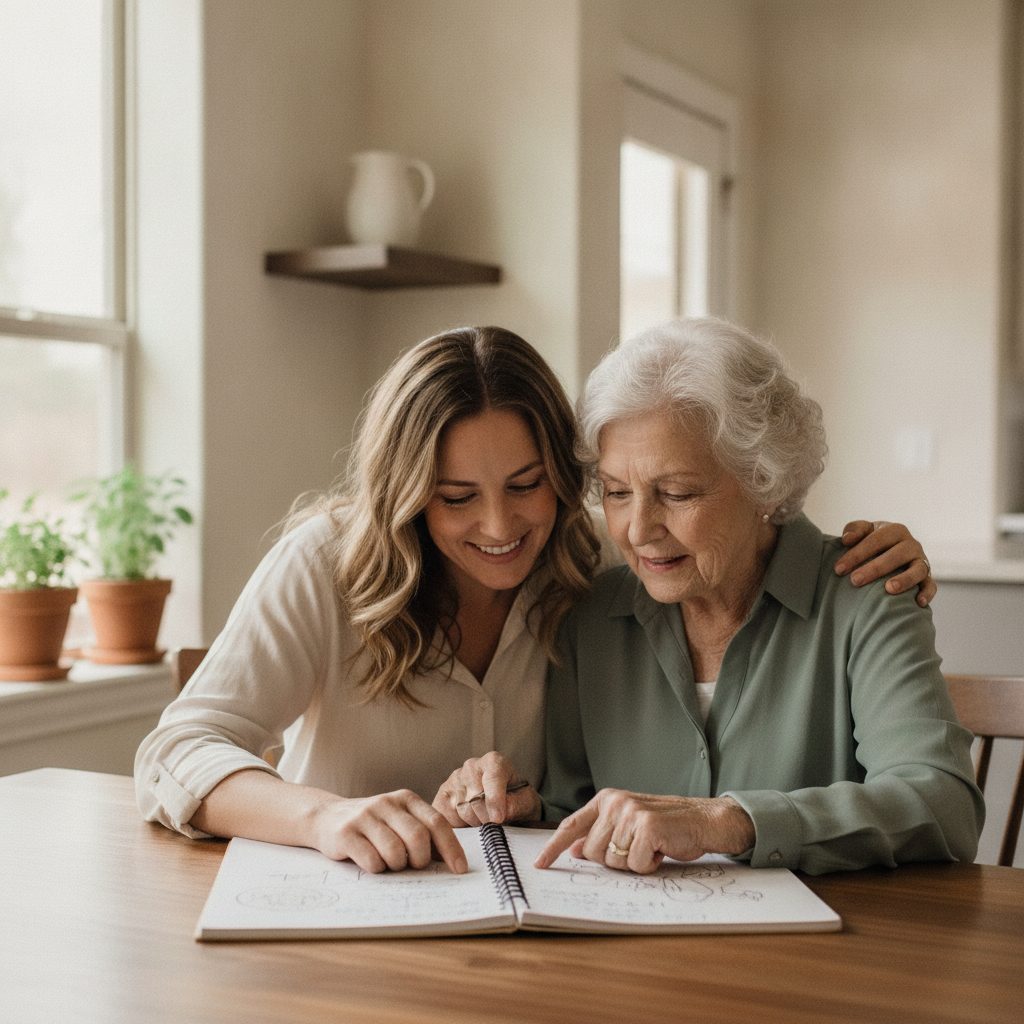
If you are reading this, you are probably already feeling the pull of two things at once: you want to do the right thing for your parent, and you want to respect who they are and what they want. That is exactly the right place to start. This guide will walk you through the practical steps — from recognizing warning signs to scheduling the first modification — without losing sight of the person at the center of all of it.
Why staying home matters
Home is more than a building. For your parent, it is the neighborhood they know, the neighbors who check in, the kitchen where they have cooked for decades, and the garden they tend every morning. When people are asked where they want to grow older, the overwhelming answer is in their own home. That wish is worth taking seriously — and it is achievable for far more people than most families realize.
The key is acting before a crisis forces the decision. Falls are one of the leading causes of injury-related hospital visits among older adults, and the bathroom is where most household falls happen — see our Texas senior fall statistics and aging-in-place data for the sourced figures. A single event can change everything — a hip fracture, a long rehab stay, a frightening near-miss — when a relatively simple modification might have prevented it. The families we work with across Austin, the Hill Country, and Central Texas almost universally say the same thing after a project is done: "We wish we had done this sooner."
Signs it may be time to make changes
You do not need to wait for a fall to act. These are the signs worth paying attention to:
- Grab marks on the wrong things. Towel bars, door frames, and countertops were not designed to bear weight. If your parent is gripping them for balance, they are already improvising support that could fail.
- Shuffling or hesitating at transitions. A slight slowdown stepping into the tub, pausing at a threshold, or gripping the wall at the top of the stairs — these are early signals that balance or confidence has changed.
- Avoiding certain rooms or activities. If your parent has stopped using the upstairs bathroom, skipped the basement, or started showering less often than they used to, ask why. Avoidance is often a quiet way of managing a risk they have not named out loud.
- Changes in how the home looks. Worn carpet on stairs, a loose handrail, dim lighting in the hallway, throw rugs at the entry — these are physical hazards that may have always been there but matter more now.
- A recent fall, even a minor one. A "near-miss" or a fall with no injury is a significant warning. The pattern matters more than any single event.
- Difficulty with daily tasks. Getting on and off the toilet, stepping in and out of the tub, or navigating the kitchen with a walker or cane — if these are harder than they used to be, the home needs to catch up with the body.
- A new diagnosis or medication change. Conditions that affect balance, coordination, vision, or energy — and some common medications — can quickly change what a home needs to be safe.
You know your parent. Trust what you observe during a visit, especially if it surprises you. A professional in-home assessment gives you an objective, room-by-room picture to work from — our whole-home accessibility assessment is free and includes a written priority list you can share with the whole family.
How to start the conversation
This is often the hardest part. Here is what tends to work — and what tends to backfire.
What works
- Lead with your feelings, not a list of problems. "I worry about you when I'm not here" lands differently than "This house isn't safe."
- Ask before you tell. "What feels harder around the house than it used to?" invites your parent into the conversation as the expert on their own experience.
- Frame changes as tools for independence. A grab bar means your parent can shower any time without waiting for you. A ramp means they can come and go on their own terms. Modifications give back control; they do not take it away.
- Start small and let the result speak. One grab bar in the shower, properly installed, looks better and feels more reassuring than most people expect. A small win builds trust in the process.
- Bring in a neutral voice. Sometimes an adult child carries too much history to be heard the way a professional can be. A home-accessibility specialist or an occupational therapist is a natural mediator — they assess the home on its merits, not on the family dynamic.
What tends to backfire
- Showing up with a plan already formed and asking for buy-in after the fact.
- Framing the conversation around what your parent can no longer do.
- Acting urgently without explaining why — it reads as a threat to their independence.
- Comparing their situation to someone else's, especially a sibling or peer who moved to a facility.
If your parent is resistant, do not push for everything at once. One honest conversation, one professional visit, one small change — that pace tends to build momentum on its own.
Room-by-room priorities
No two homes or people are exactly alike. But there is a consistent pattern to where risk is highest and where modifications make the biggest difference first. Use our aging-in-place home safety checklist to walk through the whole house systematically. Here is a brief room-by-room overview.
Bathroom — highest priority
The bathroom is where most falls happen, and it combines slippery surfaces, awkward positions, and the need to balance while undressed and sometimes fatigued. This is where to start.
- Grab bars at the toilet and in the shower or tub. These are the single most impactful safety additions in the home. They must be installed into studs or solid blocking — not into drywall alone.
- A handheld showerhead. Allows your parent to bathe while seated and reduces the need to reach and pivot.
- A fold-down shower seat or teak bench. Fatigue and balance challenges make sitting while showering significantly safer for many people.
- Non-slip flooring or a bath mat that does not slide. Suction-cup mats wear out — a permanent non-slip surface is more reliable.
- A curbless or roll-in shower. For anyone using a walker or wheelchair, or anyone for whom stepping over a tub edge feels risky, a curbless shower is the safest long-term solution. It also ages well — what works now will still work if needs change.
- A comfort-height or ADA toilet. Standard toilets are lower than most people realize. A higher seat reduces the strain of sitting down and standing up, which matters especially for anyone with hip, knee, or back issues.
Entryways and exterior — no-step entry
The ability to get in and out of the home independently is foundational. If there is even one step at the main entry, it is a barrier — especially after surgery, recovery, or any change in mobility.
- A no-step entry or wheelchair ramp. A properly graded ramp (no steeper than 1:12 rise-to-run for wheelchair use) keeps the front door accessible regardless of what happens with mobility over time.
- Secure handrails on both sides of any steps. One rail is better than none; two is the right standard.
- Good exterior lighting with a motion sensor. Evening and nighttime trips — to check the mail, take out the trash, or simply come home after dark — should not require navigating steps in the shadows.
- Level threshold at the door. Raised thresholds are a trip hazard. Most can be replaced or ramped with a simple transition threshold.
Bedroom
- Bed height. A bed that is too low — or too high — makes getting up and down significantly harder. Adjustable-height bed frames or simple risers can help without replacing the mattress.
- Clear path from bed to bathroom. The most dangerous trip is in the middle of the night. A clear, lit path with no rugs or furniture corners in the way is a simple, free change.
- Nightlights or motion-sensor lighting. Low-level lighting that activates automatically is one of the cheapest and most effective safety upgrades in the home.
- Closet access. If reaching upper shelves or bending to lower drawers is a strain, simple reorganization — keeping daily items at middle height — reduces risk without any construction.
Kitchen
- Remove clutter and trip hazards. Kitchen rugs, footstools, and step stools are common culprits. If a step stool is in regular use, that tells you something about how the kitchen is organized.
- Lever-style faucets and door handles. Turning a knob requires grip strength that arthritis can make painful or impossible. Lever handles are an easy swap that makes a real daily difference.
- Pull-out shelves and lazy Susans. Reducing the need to reach into the back of deep cabinets reduces bending, reaching, and the risk of losing balance while carrying something.
- Good task lighting. Over the stove, under the upper cabinets, and at the main prep area — aging eyes need significantly more light than younger ones to see clearly and safely.
Stairs and hallways
- Handrails on both sides of every staircase. A single rail on one side only is not enough if your parent needs to lean into both arms coming down.
- Stair nosing contrast. A contrasting strip at the edge of each stair step makes the depth of each step visible, especially in lower light.
- Stair lift or home elevator. If stairs are a significant obstacle — or will become one — a stair lift or, in some homes, a residential elevator is worth discussing as a longer-term investment.
- Widened doorways. Standard interior doorways (typically 32 inches clear) may not accommodate a walker or wheelchair comfortably. Widening to 36 inches clear is the common standard for accessibility.
How to prioritize when you cannot do everything at once
Most families do not do every modification at once, and they do not need to. The right approach is to start with the changes that address the most immediate risk and work outward from there.
| Priority | Area | Why it comes first |
|---|---|---|
| 1 | Bathroom grab bars & shower safety | Highest fall risk; relatively low cost; immediate impact |
| 2 | No-step home entry | Preserves independent access to the home; critical after any surgery or mobility change |
| 3 | Stair and hallway handrails; lighting | Night-time trips are a consistent hazard; handrails are low cost, high value |
| 4 | Curbless shower or tub-to-shower conversion | Best long-term bathroom solution; larger project, worth planning ahead |
| 5 | Doorway widening; bedroom and kitchen adjustments | Matters most if walker or wheelchair is in use or expected |
| 6 | Stair lift or elevator | Major investment; consider if stairs are an ongoing or anticipated barrier |
Every home and every person is different. This table gives a starting framework, but the right order for your parent depends on their specific health, mobility, and daily routine. Our whole-home accessibility assessment creates a personalized written plan — no guesswork required.
Funding help in Central Texas
Cost is one of the most common reasons families delay. There are programs that can help — though each has eligibility requirements and the details change over time. Here is an honest overview. For a full breakdown, see our complete Texas funding guide.
Disclaimer: We help with paperwork and documentation — we do not provide medical, legal, or financial advice. Verify current program eligibility, benefit amounts, and application requirements directly with each program.
Original Medicare
Generally does not cover home modifications such as grab bars, wheelchair ramps, walk-in tubs, or stair lifts. Original Medicare treats these as home improvements, not durable medical equipment. Some Medicare Advantage (Part C) plans now offer limited home-safety or supplemental benefits — but coverage varies by plan and is not guaranteed. Call your specific plan to ask before assuming you have this coverage.
VA HISA benefit
Veterans may be eligible for the Home Improvements and Structural Alterations (HISA) benefit, which can help pay for medically necessary modifications — including roll-in showers, grab bars, wheelchair ramps, and widened doorways. A VA physician must document that the modification is medically necessary. Verify current benefit amounts and eligibility with the VA directly, as figures change.
Texas Medicaid STAR+PLUS HCBS waiver
The STAR+PLUS Home and Community-Based Services waiver includes a Minor Home Modifications benefit that can cover certain accessibility modifications for people who qualify by both financial and functional criteria. The goal of the program is to help people stay safely at home rather than in a facility. Spots can be limited; apply early. Not everyone qualifies, and the process takes time.
Area Agency on Aging programs
Your local Area Agency on Aging — CAPCOG (Capital Area Council of Governments) for the Austin area, and AACOG (Alamo Area Council of Governments) for areas south and west — can connect you with local grant programs, volunteer home-repair groups, and other resources. Some nonprofits and Habitat for Humanity affiliates also offer home-modification help for income-qualified seniors. These programs often have waiting lists, so call early.
Out-of-pocket and planning
Many families pay for modifications themselves — and the cost is often much less than people expect, especially when you start with the highest-priority items. In Central Texas, grab bars cost in the hundreds of dollars installed. Larger projects like tub-to-shower conversions and ramps vary more widely. Request a free in-home assessment to get a written quote for your specific situation — no ballpark guessing needed. Some medically necessary home modifications may also be deductible as a medical expense on your taxes; a tax professional can advise on your situation.
Mid-point: ready to take the next step?
Get a written plan for your parent's home
Our free in-home safety assessment covers every room, reflects your parent's specific mobility and health situation, and gives you a written priority list with realistic cost ranges. There is no obligation, and we do not rush anyone into anything.
Call or text us at (512) 222-8834 — or schedule online.
Involving the whole family
Home modifications are rarely a decision one person makes alone. If you have siblings or other close family, it helps to get everyone on the same page before the assessment — or to use the written assessment as the shared starting point for a family conversation. A written, professional evaluation takes the argument out of the room: it is not one sibling's opinion versus another's, it is an expert assessment of what is actually happening in the home.
A few things that make the family conversation more productive:
- Agree ahead of time that the goal is your parent's safety and independence — not proving a point.
- Invite your parent to be part of every decision about their home. Their buy-in is not optional; it is the whole project.
- Decide who the primary point of contact with the contractor will be — one voice reduces confusion and makes sure nothing falls through the cracks.
- Talk openly about finances early. There is no point designing a plan that no one has agreed to fund.
If you live hours or states away, the day-to-day upkeep matters as much as the modifications. The burned-out hallway bulb, the sticking door, the filter nobody has changed — those small things are what quietly make a house harder and less safe to live in, and they are exactly what you cannot fix from a distance. Our handyman & small-job service exists for this: the same vetted, family-owned crew handles the to-do list, we copy you on the written quote before anything starts, and we send photos when the work is done. Free estimates, for small jobs and big projects alike. And when you want the upkeep to simply happen on its own, the Live Oak Home Care Plan puts those visits on a quarterly or monthly schedule — with a photo report to you after every one, so you never have to wonder.
What to expect from a home-accessibility contractor
Not every contractor who installs a grab bar understands what it is for. A Certified Aging-in-Place Specialist (CAPS) has been trained specifically in the intersection of construction, accessibility, and the real-life needs of older adults. That means the bar goes where it is actually useful for your parent's height and grip — not just where it is easy to install.
At Live Oak Home Access, here is what a typical project looks like:
-
Free in-home safety assessment
We walk every room with your parent (and you, if you are there), observe how they move through their home, and ask about their daily routine and any specific concerns. We look at the home through the lens of what life actually looks like day to day.
-
Written priority list and estimate
We provide a written report with prioritized recommendations and a detailed cost estimate for Central Texas. If VA HISA or Medicaid paperwork is relevant, we use the format those programs require. You have a document to take to the family conversation.
-
Scheduling and preparation
We work around your parent's schedule. We protect floors and surfaces, keep work areas organized, and clean up every day before we leave. For your parent, a crew in the home should feel respectful, not intrusive.
-
Installation and walkthrough
When the work is done, we walk through everything with your parent — how to use each new feature, what it is designed to do, and what it will feel like in daily use. We test grab bars to spec and make sure your parent feels confident, not just that the job looks finished.
-
Written responsibilities and support
Your written scope identifies the work, the responsible provider and the applicable warranty terms. Live Oak installations and separately contracted partner work have separate responsibilities. Ask us to explain these before work begins.
A note on doing it right versus doing it fast
If your parent has had a fall or a health event, the urgency you are feeling is real. But rushing a modification — choosing the first available contractor, skipping the assessment, installing grab bars in the wrong location — can give a false sense of security without delivering the safety you need. A grab bar installed into drywall without proper backing can pull out of the wall exactly when it is needed most. A ramp built at the wrong grade can be harder to navigate than the step it replaced.
We understand the impulse to move fast. We will always work with your timeline. But we will also always tell you the truth about what is right — because the whole point of the project is that it actually works when it matters.
Central Texas communities we serve
We are a family-owned business based in Driftwood, just south of Austin, and we work throughout the Austin metro, the Hill Country, and Central Texas — including communities with a high concentration of older adults who have lived here for decades and want to stay. We serve Austin, Round Rock, Georgetown, Cedar Park, Leander, Kyle, Buda, San Marcos, Wimberley, Marble Falls, Burnet, Fredericksburg, New Braunfels, and the surrounding areas. Check our full service areas page for the complete list.
If you are not sure whether we cover your parent's area, call us at (512) 222-8834 or send a text — we will give you a straight answer.
Frequently asked questions
How do I know when my parent's home is no longer safe?
Look for changes rather than waiting for a crisis. Warning signs include a fall (even a minor one), bathroom grab marks on towel bars or door frames, worn carpet on stairs, difficulty getting off the toilet or out of the tub, changes in gait or confidence when walking, and clutter or poor lighting in hallways. A professional in-home safety assessment gives you a room-by-room picture and a written plan so you are acting on facts, not guesses.
How do I start the conversation about home safety with my aging parent?
Lead with your feelings, not a list of problems. Say something like, "I want you to stay in this house as long as possible — help me understand what feels hard." Ask open questions and listen before suggesting solutions. Frame modifications as tools that give your parent more independence, not signs of decline. It often helps to involve a neutral professional — a home-accessibility specialist or occupational therapist — who can assess the home on its merits without the emotional history you and your parent share.
What are the most important home modifications for aging in place?
The bathroom is the highest-priority space because it is where most falls happen. At minimum, consider grab bars at the toilet and in the shower or tub, a handheld showerhead, and a shower seat. A curbless or roll-in shower is the safest long-term choice. Beyond the bathroom: remove trip hazards (loose rugs, raised thresholds), improve lighting throughout the home, add stair handrails on both sides if there are steps, and create a no-step entry to the home. The right mix depends on your parent's specific mobility, balance, and health.
Does Medicare pay for home modifications like grab bars or ramps?
Generally, no. Original Medicare does not cover home modifications such as grab bars, wheelchair ramps, stair lifts, or walk-in tubs. Some Medicare Advantage (Part C) plans offer limited home-safety or supplemental benefits — but coverage varies by plan and is not guaranteed. Verify the specific plan details before assuming coverage. Other programs that may help include the VA HISA benefit for eligible veterans, the Texas Medicaid STAR+PLUS HCBS waiver for income- and care-level-eligible individuals, and local Area Agency on Aging programs. We help with paperwork; this is not medical, legal, or financial advice — verify current program details.
What is the first step to help my parent age in place?
Schedule a professional in-home safety assessment. A home-accessibility specialist will walk through every room, evaluate your parent's specific mobility and daily routines, and provide a written priority list with realistic cost ranges for Central Texas. This removes the guesswork and gives you a concrete plan to discuss as a family. The assessment is free from Live Oak Home Access — call (512) 222-8834 or request one online.
Is it better to modify the home now or wait until there is a problem?
Acting before a crisis is nearly always better. A fall or a health event can force rushed decisions — an emergency move, a quick hire of whichever contractor is available, or a rehab stay that might have been avoidable. When you plan ahead, you choose the right modifications for your parent's lifestyle, the work can be scheduled at a convenient time, and funding programs (VA HISA, Medicaid waivers, local grants) that require advance paperwork are actually accessible. Most families we work with wish they had started six months sooner.
How much do aging-in-place home modifications cost in Central Texas?
Costs vary widely depending on what is needed. In Central Texas, grab bar installation typically runs in the hundreds of dollars for a few bars. A tub-to-shower conversion can range from a few thousand dollars to well over ten thousand depending on scope and finishes. Wheelchair ramps, stair lifts, and broader bathroom remodels each carry their own ranges. A free in-home assessment gives you an exact, written quote for your parent's specific home and situation — no guessing from general estimates.
Can I stay in the room during the assessment?
Absolutely, and we encourage it. An in-home safety assessment works best when the adult child (or another trusted family member) is present alongside the parent. You may notice things your parent underplays, and you can ask questions about your own observations. The specialist's written report goes to everyone in the conversation so the whole family is working from the same information.
Are grab bars strong enough to actually support someone if they fall?
Yes, when installed correctly into wall studs or with solid backing. A properly installed grab bar is designed to support a person's body weight in a sudden load — that is the whole point. Grab bars should never be installed into drywall alone with standard anchors. Our team installs bars per ADA and manufacturer specifications, locating studs or adding solid blocking as needed, and we test every bar before we leave.
What should I look for in a contractor for aging-in-place modifications?
Ask us about the coverage and qualifications relevant to your project. Your written scope identifies who performs the work and the applicable warranty terms. Live Oak handles home-accessibility installations and routine upkeep within its scope. For plumbing, electrical, tile and structural work, the homeowner contracts with the appropriate trade partner; we help define the scope and coordinate the work.
What if my parent refuses to make changes?
This is one of the most common and most painful situations adult children face. A few things tend to help: involve your parent in every decision rather than presenting a done plan; frame each change as restoring freedom ("this shower seat means you can shower any time without waiting for me to be home"); bring in a neutral professional — sometimes a home-accessibility specialist or occupational therapist is heard differently than a son or daughter; and start small with one visible improvement so your parent can see that the result looks good and feels better. Respect goes a long way. We have had that conversation with many families and are glad to help you think through the approach.
Do you serve areas outside Austin, like Wimberley, Marble Falls, or Georgetown?
Yes. Live Oak Home Access serves the Austin metro and the broader Central Texas area, including the Hill Country communities south and west of Austin as well as communities north toward Georgetown and east into Bastrop County. If you are not sure whether we cover your parent's neighborhood, call us at (512) 222-8834 or check our service areas page.
Live far away? Put the house on a schedule
The Live Oak Home Care Plan sends the same trusted crew on a schedule and emails a photo report to the family after every visit — a clear record of the work completed, even from states away. No long-term commitment, cancel anytime.
Your parent deserves to stay in the home they love.
A free in-home safety assessment is the easiest way to start. We will walk the house with you, give you a written priority list, and answer every question — no pressure, no obligation. We're family-owned and local to Central Texas.
Clear Written Scope · home-accessibility · Serving Austin, the Hill Country & Central Texas