

Senior Fall Statistics & Aging-in-Place Data
Real numbers — sourced from the CDC, AARP, the U.S. Census Bureau, and Texas DSHS — on how many older adults want to stay home, how often falls happen, and what research can and cannot tell us about home modifications.
Four figures every Texas family should know
-
75%
of adults 50 and older want to age in place.
-
1 in 4
adults 65 and older falls each year — more than a quarter.
-
3 million
older adults go to the emergency department for falls each year.
-
+88%
projected growth of Texans 65 and older between 2023 and 2050.

The short answer: AARP's 2024 survey found that 75% of adults 50 and older want to age in place, yet most homes were not designed to support that goal safely. The CDC reports that more than 1 in 4 adults 65 and older falls each year, and hazards can occur throughout the home. Targeted home-hazard reduction can reduce falls for people at higher risk; the evidence does not establish that every remodel or product prevents falls.
By Drew Chandler — Home Accessibility & Project Coordination · Updated 2026-09-16
Why These Numbers Matter
When a family starts talking about whether a parent should move — to assisted living, to a daughter's house, to a smaller place — the conversation is usually triggered by a fall, a close call, or a health change that made the current home feel unsafe. What most families do not know is that the home itself can often be changed more quickly and affordably than they imagine, and that the research behind those changes is solid.
This guide collects the most reliable, publicly sourced statistics on aging in place and senior safety. We name our sources so you can verify every figure yourself. We also explain what each number means in plain terms for a Central Texas family weighing their options.
If you want to move straight to action, our room-by-room aging-in-place home safety checklist covers every common risk factor. Or schedule a whole-home accessibility assessment — our home-accessibility team visits your home, identifies what needs attention, and gives you a written, prioritized plan.
How Many Older Adults Want to Age in Place?
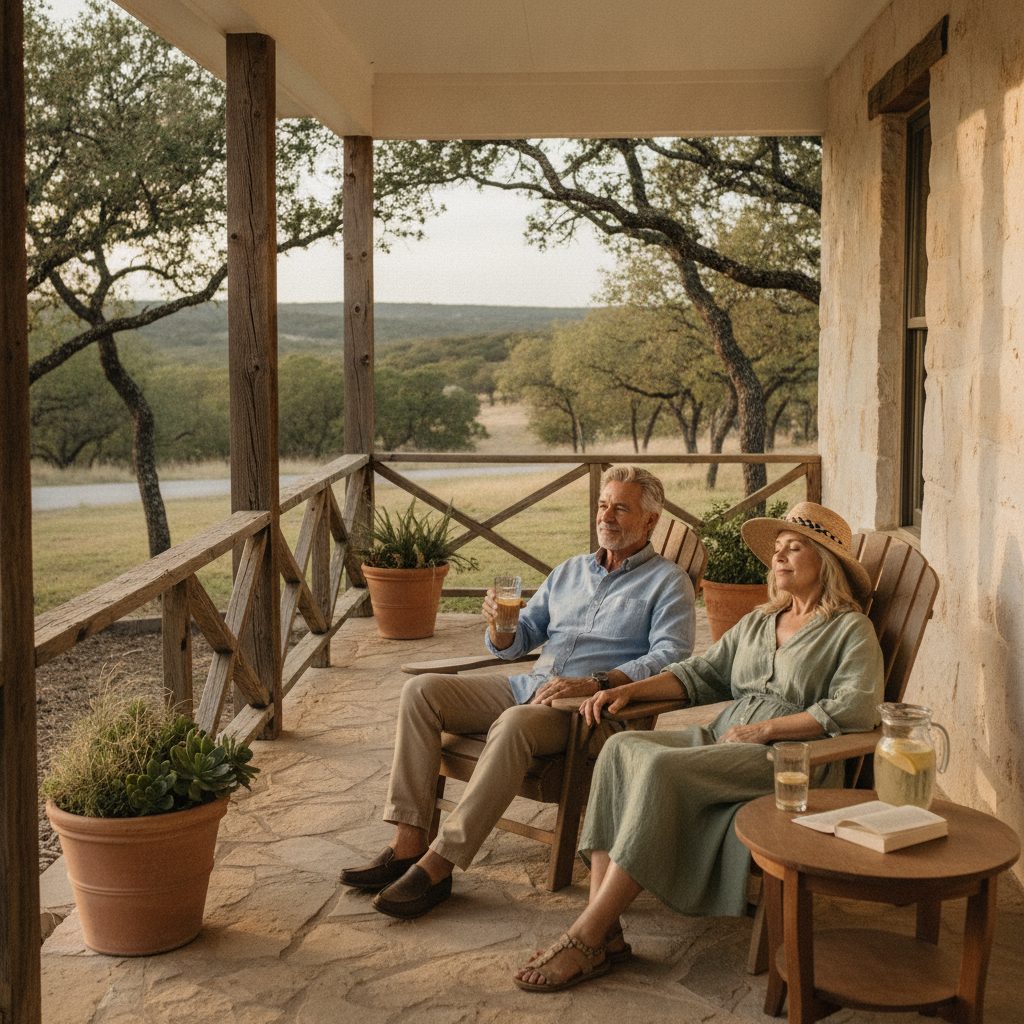
A majority of older adults surveyed by AARP prefer to stay in their current home. Preferences still vary, and moving can be the right choice for an individual household.
- 75% of adults age 50 and older say they want to remain in their current home as they age, according to AARP's 2024 Home and Community Preferences research (fieldwork June–July 2024). A 2021 AARP survey found a similar pattern: 77% want to stay in their current home and 79% want to stay in their current community.
- The desire to stay home holds up across every recent AARP survey, not just a single one-off poll.
- The preference does not change much by income level, health status, or geography. Even people who acknowledge their home may need changes still overwhelmingly prefer to make those changes rather than move.
- AARP research also finds that a majority of adults 50 and older have done little or no planning for how they will manage their home as they age — a gap between intention and preparation that this guide is designed to help close.
What this means for your family: The wish to stay home is not stubbornness. It is the consistent, deeply held preference of the vast majority of older adults. Planning ahead — while health is good and choices are wide — is the most effective way to honor that preference and reduce the risk of a crisis-driven decision later.
The Growing Senior Population in Texas
Texas has one of the fastest-growing senior populations in the United States, and Central Texas is a particularly active part of that trend. The Texas Demographic Center projects the number of Texans age 65 and older will grow more than 88% between 2023 and 2050 — nearly double, rising from about 12.3% to 17.6% of the state's population. (Source: Texas 2036, Understanding Texas' Population Growth, citing Texas Demographic Center projections)
- Nationally, the 65-and-older population reached 61.2 million in 2024 — 18.0% of all Americans, up from 12.4% in 2004 — a 3.1% increase in a single year, as the large baby-boom generation moves fully into older age. (Source: U.S. Census Bureau, Vintage 2024 Population Estimates, June 2025)
- Texas routinely ranks among the states with the largest net in-migration of retirees from other states, particularly from California, Illinois, and other higher-cost markets.
- Hays County (which includes Dripping Springs and Kyle), Comal County (New Braunfels), Williamson County (Georgetown, Round Rock), and Burnet County have all seen significant growth in their senior populations, reflecting the draw of Central Texas's climate, cost relative to coastal metros, and quality of life.
- The Texas Demographic Center documents that the proportion of Texans over 65 is rising faster than the overall state population, a pattern expected to continue for at least another decade.
- Georgetown, in Williamson County, has long been recognized as one of the fastest-growing cities for retirement-age adults in the United States — reflecting exactly the kind of community that aging-in-place planning serves.
What this means practically: the demand for accessible, age-ready housing in Central Texas is growing fast — and the supply of homes that are already set up to support aging safely is not growing nearly as fast. Most of the housing stock in Dripping Springs, Wimberley, Marble Falls, Canyon Lake, and the surrounding Hill Country was built for younger buyers, with standard tubs, single handrails, and steps at every entrance.
Senior Fall Statistics: The National Picture
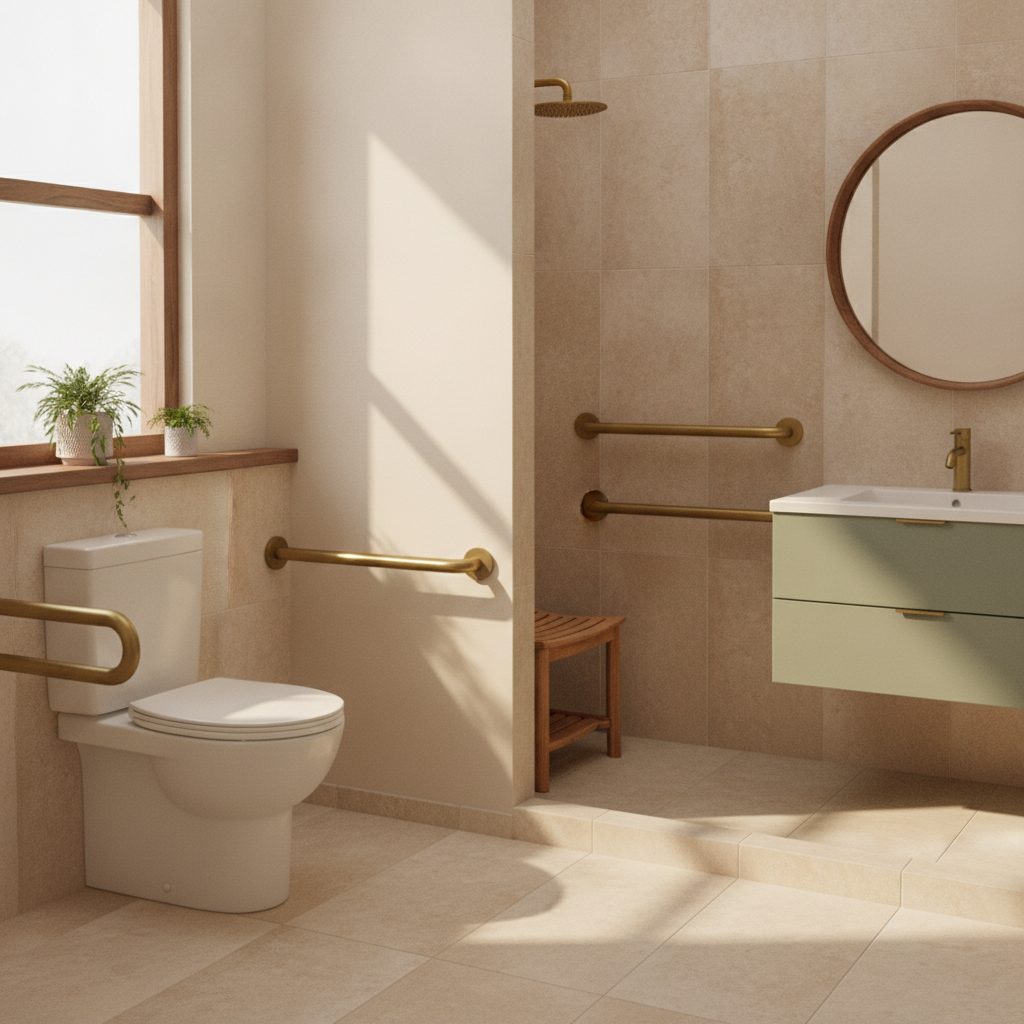
Falls are not an inevitable part of aging — but they are the most serious and common safety risk facing older adults living at home.
- The CDC identifies falls as the leading cause of both fatal and non-fatal injuries among adults 65 and older in the United States, and reports that more than 1 in 4 older adults falls each year. (Source: CDC, Older Adult Falls Facts & Stats)
- Each year, falls send about 3 million older adults to the emergency department and cause about 1 million hospitalizations. Falling once roughly doubles the chance of falling again. (Source: CDC)
- Hip fractures are among the most serious consequences of a fall — the CDC reports about 319,000 older adults are hospitalized for hip fractures each year, and in 2019, falls caused 83% of hip fracture deaths and 88% of hip-fracture ED visits and hospitalizations. A hip fracture frequently leads to surgery, a period of rehabilitation, and — in some cases — a lasting decline in independence.
- Falls can cause serious injuries, including traumatic brain injuries (TBIs). (Source: CDC)
- The financial cost of fall injuries in the United States runs into the tens of billions of dollars annually in direct medical costs alone. (Source: CDC)
Look for Hazards Throughout the Home
Start with the places the person uses and finds difficult. A national statistic cannot tell you which room should come first in a particular home.
- Bathrooms: review wet surfaces, tub entry, toilet transfers, and reachable support.
- Stairs: review lighting, tread condition, and continuous, graspable handrails.
- Entries and walkways: look for clutter, uneven transitions, steps, and enough space for the person's mobility equipment.
- Bedrooms and nighttime routes: check lighting and the clear path between the bed and bathroom.
Choose priorities around the person. A clinician or occupational therapist can assess movement, balance, vision, and transfer needs. We can then evaluate how the home can support those recommendations. No single room or product is the highest priority for everyone.
Does Modifying a Home Actually Reduce Falls?
A 2023 Cochrane review of environmental interventions found that targeted home fall-hazard reduction helps older adults at higher risk of falling. It did not find the same benefit in groups not selected for fall risk, and evidence about preventing serious injuries was limited.
Those findings concern assessed programs, not a guarantee for a grab bar, shower conversion, or other single product. A modification can improve access or make a daily task easier without having a proven individual effect on fall rates.
The CDC's STEADI approach combines screening, assessment, and interventions tailored to the person. Home changes can be one part of that plan, alongside clinical attention to balance, medications, vision, and other risk factors.
The Gap Between Wanting to Age in Place and Being Ready to
Wanting to stay home and having a home that supports changing needs are different questions.
- Review routes, transfers, and daily activities before choosing products. A newer home is not necessarily suited to a particular person or mobility device.
- Planning ahead gives a household time to compare options and arrange work. Costs and clinical benefits depend on the person and the scope.
- A fall or new difficulty with balance, vision, or mobility is a reason to discuss an individual risk assessment with a healthcare professional.
What Specific Modifications Can Help With
This table describes practical purposes and assessment questions. It does not rank products by clinical effectiveness or promise that a particular installation will prevent a fall.
| Modification | Practical purpose | What to assess |
|---|---|---|
| Grab bars at toilet or shower | Provide reachable support during a transfer | Position, grip, anchoring, and the person’s transfer technique |
| Curbless or roll-in shower | Remove a step-over barrier and improve access | Drainage, slip resistance, clear space, seating, and transfer needs |
| Stair handrails | Provide support along the stair route | Graspability, continuity, height, and condition of the stairs |
| Step-free entry or ramp | Provide an alternative to steps | Slope, landings, handrails, drainage, and equipment limits |
| Toilet-height adjustment | Change the height of a sit-to-stand or seated transfer | Foot support, body size, equipment, and the person’s preferred transfer |
| Lighting and clear walkways | Make obstacles easier to see and routes easier to use | Glare, switches, nighttime use, and furniture placement |
| Slip-resistant surfaces | Improve traction under expected conditions | Wet use, cleaning, transitions, and footwear |
| Stair lift, platform lift, or elevator | Provide another way to travel between levels | Transfer ability, equipment fit, safe operation, and emergency arrangements |
| Doorway widening | Provide clearance for the person and mobility equipment | Actual clear opening, approach space, and structural requirements |
Texas-Specific: What We Know About Senior Falls in the Lone Star State
The Texas Department of State Health Services publishes injury and mortality data through Texas Health Data. Use a specific year, age group, and measure when comparing Texas with national figures; a national statistic does not establish a local ranking.
For an individual Central Texas home, assess the actual entry steps, outdoor routes, lighting, and indoor tasks rather than inferring risk from the ZIP code. Veterans can also ask the VA about medically necessary home modifications and HISA eligibility, covered in our funding guide.
What These Numbers Mean for Your Family
Use the research to start a conversation about a particular home and person:
- Start with daily tasks. Ask which activities are difficult or uncomfortable, and review possible changes with the person who will use them. Planning ahead gives more time to compare options; it does not guarantee lower costs or prevent every fall.
- Bathroom tasks deserve an individual review. A step-free shower, well-placed supports, or a different toilet height may help with specific transfers. The right changes depend on the person; they do not remove every source of fall risk.
- Grab bars can provide support where it is needed. Position and anchoring must suit the person, wall construction, product rating, and applicable requirements. Have the person’s support and transfer needs assessed before choosing positions.
- Your parents' home does not have to look institutional. Modern accessibility products — decorative grab bars, curbless showers with frameless glass, comfort-height toilets — are designed to look like a well-appointed home. We see this concern constantly; the reality is that the end result is a home that looks and functions better, not worse.
- A professional assessment changes the conversation. Families often argue about what to do. A whole-home accessibility assessment gives everyone a shared, objective baseline — specific items, specific locations, specific priorities — that moves the conversation from opinion to plan.
If you are ready to take that step, our free in-home safety assessment is a no-obligation, no-pressure way to get a clear picture of what your home needs. You can also call or text us at (512) 222-8834 to talk through your situation first.
How to Use This Information
This guide is designed to be a citable resource — something you can send to a parent, share with a sibling, or bring to a conversation with a doctor. Here is how to think about the information in it:
- For a patient or family member who has had a fall: The statistics confirm that this is not an isolated event — falls are the leading injury cause among older adults, and a first fall is a recognized predictor of future falls. Now is the right time to assess the home. Request an occupational therapy evaluation through your physician, and contact us for the home-modification side of the work.
- For a family in the "should we move?" conversation: Compare the full cost and feasibility of each option, including modifications, ongoing care, maintenance, and the person’s preferences. A safer layout alone may not meet every care need. Start with a professional assessment to understand what the modifications would actually involve.
- For someone who is healthy and planning ahead: You are in the best position of anyone reading this. Planning ahead gives you time to choose changes around your preferences, compare estimates, and consider future care needs.
- For a healthcare provider or discharge planner: We work alongside OT recommendations and can provide same-week or next-week assessment appointments for post-hospitalization patients in the Austin, Hill Country, and Central Texas area. Call (512) 222-8834 to discuss a referral or fast-track assessment for a patient being discharged.
Key Sources Referenced in This Guide
- CDC Older Adult Fall Prevention: cdc.gov/falls — the most comprehensive public source for fall statistics, risk factors, and evidence-based prevention strategies in the U.S.
- CDC STEADI (Stopping Elderly Accidents, Deaths & Injuries): cdc.gov/steadi — clinical tools and evidence summaries for healthcare providers on fall prevention, including home modification.
- AARP Home and Community Preferences Survey: 2024 Home and Community Preferences survey — polling on where older adults want to live and their preparation (or lack of it) for aging in place.
- AARP Public Policy Institute: Reports on housing availability, aging-readiness of the U.S. housing stock, and economic analyses of aging-in-place versus facility care.
- U.S. Census Bureau: Population estimates and projections for older adults nationally and by state, including Texas.
- Texas Demographic Center: texasdemographics.org — state-level population data and projections, including age breakdowns by county.
- Texas Department of State Health Services (DSHS): Texas Health Data — Texas-specific injury and mortality data including fall-related injuries among older adults.
- National Council on Aging (NCOA): ncoa.org — research and programs on fall prevention, healthy aging, and cost-effectiveness of aging-in-place interventions.
- American Occupational Therapy Association (AOTA): aota.org — evidence-based practice resources on home modification and fall prevention from a clinical perspective.
A note on accuracy: National statistics describe populations, not the risk or best treatment for an individual. The modification examples explain functional purposes; they are not clinical effectiveness ratings or guarantees. Statistics like these are periodically updated by CDC and AARP — for the most current numbers, always go directly to the linked source. We help with paperwork and home modifications; this is not medical, legal, or financial advice — verify current program details and statistics with the appropriate agencies.
Frequently Asked Questions
What percentage of older adults want to age in place?
According to AARP's 2024 Home and Community Preferences research, 75% of adults age 50 and older say they want to remain in their current home as they age. This is a national survey result, not a prediction of what is practical or preferable for every household.
How common are falls among seniors?
The CDC reports that more than 1 in 4 adults 65 and older falls each year, with over 3 million emergency department visits and about 1 million hospitalizations for older-adult falls annually. A previous fall is a reason to discuss risk with a healthcare professional. Review hazards throughout the home rather than assuming one room determines the person’s risk.
Does removing fall hazards actually reduce the risk of falling?
Targeted home fall-hazard reduction can help older adults at higher risk of falling. The 2023 Cochrane review did not find the same benefit in populations not selected for fall risk. These findings do not establish that each individual product or remodel prevents falls.
Is the Texas senior population growing?
Yes, significantly. Texas is one of the fastest-growing states in the country, and its senior population is growing even faster than the overall population, driven by both natural aging of existing residents and in-migration from other states. Central Texas — the Austin–Round Rock metro, Hays and Comal counties, and the Hill Country — has seen especially rapid growth, including among retirees. The U.S. Census Bureau and Texas Demographic Center both document this trend.
What home modifications most effectively reduce fall risk?
There is no single best modification for everyone. Discuss the person’s difficult tasks, mobility equipment, and clinical recommendations first. Options may include reachable supports, clearer walkways, improved lighting, and step-free access. Their suitability depends on the person and home, and this guide does not rank them by clinical effectiveness.
How much do home safety modifications cost in Central Texas?
Costs vary widely depending on the type and scope of work. In Central Texas, a single grab bar installation may run a modest amount, while a full curbless shower conversion or an accessible bathroom remodel is a larger investment. A free in-home assessment gives you an exact quote for your home and your needs — typical Central Texas ranges are covered in our cost guide.
When is the right time to make home modifications?
Review the home when a daily task becomes difficult, mobility equipment changes, or a healthcare professional recommends it. After a fall or a new balance or mobility concern, seek a clinical assessment as well as reviewing the home. Planning ahead gives you time to compare options, but cost savings and fall prevention cannot be guaranteed.
What is a CAPS certification and why does it matter?
CAPS stands for Certified Aging-in-Place Specialist. It is a designation from the National Association of Home Builders (NAHB) that requires training in the technical, business, and customer-service aspects of designing and building in ways that support aging in place. A home-accessibility contractor understands the needs of older adults and people with disabilities — not just the building code, but how humans actually move through and use their homes. Live Oak Home Access is a home-accessibility contractor.
What is a whole-home accessibility assessment?
A whole-home accessibility assessment is a structured review of your home, room by room, to identify safety risks and opportunities to make the home work better as you or a family member ages. A good assessment looks at entrances, bathrooms, bedrooms, kitchen, stairs, lighting, flooring, and more. It results in a prioritized list of recommended changes and — from us — a written estimate. Our free in-home safety assessment is a no-obligation starting point. Learn more at whole-home accessibility assessment.
Do most seniors eventually need home modifications?
Needs vary with the person, equipment, and home. Some households benefit from small changes; others need substantial adaptations or additional care. An individual assessment is more useful than assuming every older adult needs the same work.
Where can I find an occupational therapist who specializes in home safety for seniors?
Your primary care physician can provide a referral for an occupational therapy (OT) home evaluation, which Medicare Part B may cover as a medically necessary service (not as a home modification — check your plan). You can also search the American Occupational Therapy Association (AOTA) directory. We work alongside OT recommendations: once a therapist identifies what the home needs, we do the licensed construction work to make it happen.
What is the STEADI program?
STEADI — Stopping Elderly Accidents, Deaths & Injuries — is a fall-prevention initiative from the CDC designed for healthcare providers. It gives clinicians tools to screen patients for fall risk, assess contributing factors, and recommend evidence-based interventions including home modifications, balance exercises, and medication reviews. If your doctor has mentioned STEADI or a fall-risk assessment, it means they have identified fall prevention as a priority for you. A home-accessibility contractor is the right next call after a clinical assessment identifies home modifications as a need.
Are there specific statistics for senior falls in Texas?
The Texas Department of State Health Services publishes injury and mortality data through Texas Health Data. Check the year, age group, and measure before comparing a Texas figure with a national one. This guide does not establish a Texas-specific ranking or a risk estimate for an individual home.
Does Medicare pay for home modifications to prevent falls?
Generally, no. Original Medicare does not pay for home modifications such as grab bars, ramps, curbless showers, or stair lifts. Some Medicare Advantage (Part C) plans have added limited supplemental home-safety benefits that may help with certain items — but coverage varies significantly by plan. Verify your specific plan's benefits. We help with paperwork; this is not medical, legal, or financial advice — verify current program details. For funding options, see our guide on paying for home modifications in Texas.
Turn the numbers into a plan for your own home
A free, whole-home accessibility assessment walks every room with you and leaves you with a written, prioritized plan. No pressure, no obligation — just a clear picture of what the house needs.
See What Your Home Needs — at No Cost
Our home-accessibility team comes to you for a free, no-obligation in-home safety assessment. We look at every room, explain what we find in plain terms, and give you a written, itemized quote. No hard sell. No surprises.
Serving Austin, Dripping Springs, Wimberley, Georgetown, New Braunfels, Marble Falls, and all of Central Texas. Clear Written Scope. Family-owned.