

ADA Toilet Height & Comfort-Height Options
The ADA toilet height standard is 17–19 inches — and for good reason. Learn what that means for your home, how comfort-height and handicap toilet options compare, and what ADA toilet requirements look like in practice.
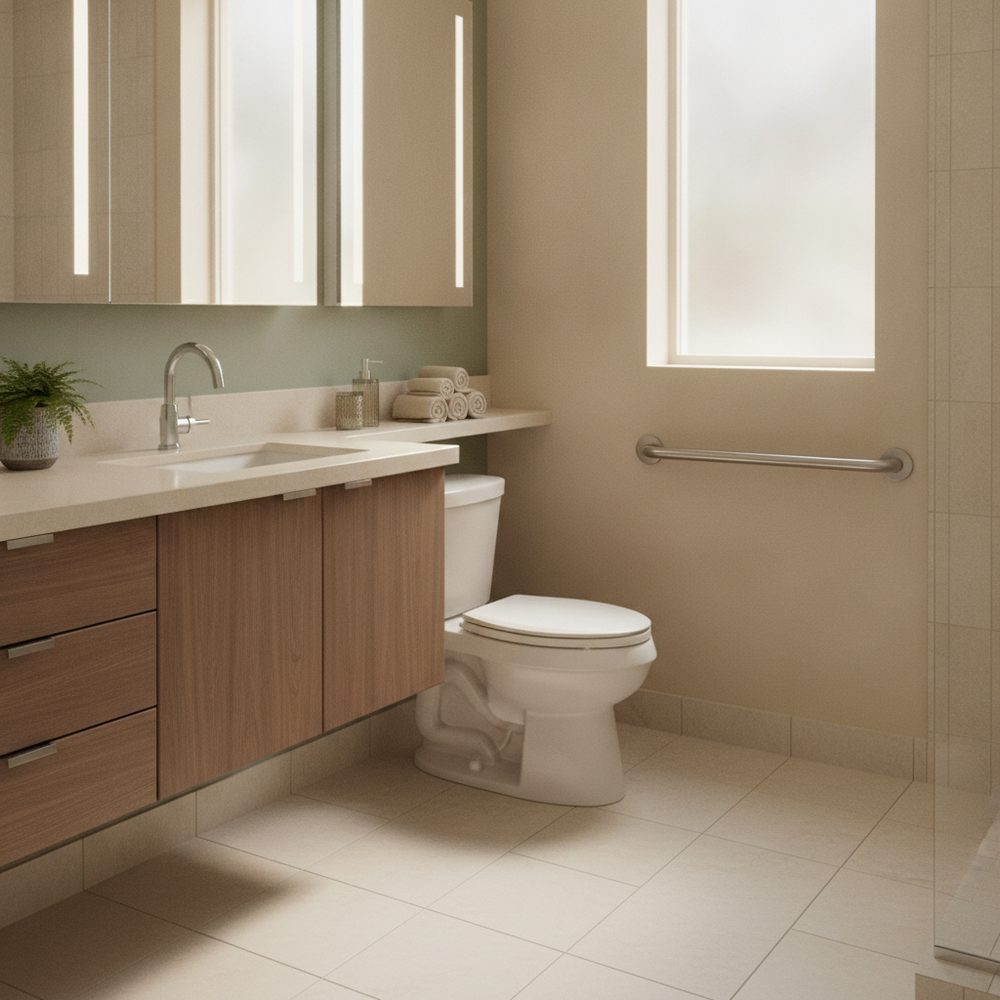
The ADA requires toilet seats to sit 17 to 19 inches above the finished floor. Comfort-height (also called chair-height or handicap toilet height) toilets are built to the same range. Standard toilets measure roughly 15 to 16 inches — 2 to 4 inches lower, which is enough to make sitting and rising noticeably harder for anyone with joint pain, limited strength, or balance concerns.
By Drew Chandler — Home Accessibility and Project Coordination · Updated 2026-09-13
Why Toilet Height Matters More Than You Think
Getting on and off a toilet is one of the most physically demanding things we do every day. You lower your entire body weight against gravity, then push back up using leg muscles, core muscles, and whatever you can grip nearby. When those muscles or joints are not cooperating — because of arthritis, a hip or knee replacement, Parkinson's, or just the natural changes of aging — a toilet that is too low can go from inconvenient to genuinely dangerous.
Falls are one of the leading causes of injury for older adults, and the bathroom is one of the most common rooms where they happen. Choosing the right toilet height is a simple, affordable change that removes one significant risk factor. When we pair it with well-placed grab bars and bathroom safety hardware, the difference is dramatic.
The Three Heights: Standard, Comfort-Height, and ADA
You will see all three terms in stores and online. Here is exactly what each one means.
| Type | Seat height (top of seat, finished floor) | Best suited for |
|---|---|---|
| Standard | 15–16 inches | Children; shorter adults; some younger adults |
| Comfort-height / chair-height | 17–19 inches | Most adults; aging-in-place; anyone with joint or mobility concerns |
| ADA-compliant | 17–19 inches to the top of the seat | Public / commercial facilities; home use where ADA guidance is followed |
Note on measurement: ADA §604.4 measures the 17–19 inch height from the finished floor to the top of the seat, not the bowl rim. Confirm whether a product’s advertised height includes the seat.
How Do Comfort-Height Products Relate to ADA Requirements?
The Americans with Disabilities Act Standards for Accessible Design (§604.4) specify a seat height of 17 to 19 inches for public and commercial restrooms. Manufacturers developed the "comfort-height" category to meet that same range for the residential market. In practice, the two terms describe toilets with identical seat heights.
A product described as ADA-compliant still needs to be installed in a layout that meets the applicable requirements. Seat height is only one part: approach space, grab bars, controls and other features also matter. A “comfort-height” label alone does not establish compliance.
For a private home, choose the seat height around the person’s feet, transfers and equipment. Ask which accessibility and building requirements apply to the property and the proposed project.
Can a Toilet Be Too Tall?
Yes. A toilet above 19 inches will leave many adults — especially people of average or shorter height — with their feet off the floor or barely touching it. When your feet cannot rest flat, your lower back bears extra strain, and it becomes harder to engage the abdominal muscles you need for complete elimination. Forcing the issue with a toilet that is too tall can create new discomfort even as it solves a different one.
This is why a single "taller is always better" rule does not hold up. The right height depends on your individual body proportions. A good rule of thumb: when seated, your hips should be level with or slightly above your knees, and your feet should rest flat on the floor. A home-accessibility professional can take measurements and recommend a seat height that fits you specifically.
Comfort-Height vs Standard Toilet: A Side-by-Side
| Factor | Standard (15–16") | Comfort-height (17–19") |
|---|---|---|
| Ease of sitting down | Requires deep knee and hip bend | Shallower bend, less joint stress |
| Ease of standing up | More force needed from leg muscles | Significantly easier; more like rising from a chair |
| Fall risk | Higher, especially without grab bars | Lower, particularly when combined with grab bars |
| Children / shorter users | Better fit for shorter stature | May need a step stool for children |
| Wheelchair transfer | Low; transfer is more difficult | Closer to seat height; transfer is easier |
| Typical cost (fixture only) | Lower price range | Slight to moderate premium; wide range available |
ADA and Handicap Toilet Requirements Beyond Height
In commercial and public settings, ADA compliance involves more than just seat height. The same standards that define handicap toilet height also govern the space, grab bars, controls, and accessories around it. If you are curious about the full specification — or if you are adapting a home that may eventually need to meet commercial standards — here is what the ADA Standards for Accessible Design cover for toilet rooms:
- Seat height: 17–19 inches, measured to the top of the seat
- Floor space: A 60-inch minimum clear floor space beside the toilet for a side transfer, with the toilet centerline 16–18 inches from the side wall in a standard accessible stall
- Grab bars: A 42-inch grab bar on the side wall and a 36-inch bar behind the toilet, mounted 33–36 inches above the floor
- Flush controls: Located on the open side of the toilet, operable with a closed fist (no tight grasping required)
- Toilet paper holder: Positioned 7–9 inches in front of the toilet and 15–48 inches above the floor
For a private home, these measurements are excellent targets rather than legal requirements. They represent decades of research into what makes a bathroom work for the widest range of people. Our comfort-height and ADA toilet installation service follows these guidelines by default, because the research behind them is solid and it protects your home's long-term usability and resale value.
Toilet Risers: A Temporary Fix, Not a Long-Term Solution
Toilet risers are plastic rings that slip over an existing toilet to add 2 to 4 inches of height. They are inexpensive and available at most pharmacies. If you are recovering from surgery or need something in place quickly, a riser can help short-term.
A raised seat must be compatible with the toilet, securely fitted and used within the manufacturer’s instructions and load rating. Check the final height and the person’s transfer needs. A clinician can help decide whether a riser or another arrangement fits.
Replacing the toilet with a proper comfort-height model typically costs only a little more than a quality riser, lasts decades longer, and eliminates the safety concerns entirely. It is almost always the better investment.
Bidet Seats and Raised Seats
Many families ask about bidet toilet seats at the same time they consider a new toilet. A bidet seat can be an excellent addition for someone who has difficulty with personal hygiene due to limited reach, shoulder pain, or other mobility limitations. Most bidet seats add 2 to 3 inches of height above the toilet rim, which can be a benefit on a standard-height toilet but may push a comfort-height toilet above the ideal range for shorter users.
This is one more reason a personalized assessment matters. We look at the whole picture: who uses the bathroom, how tall they are, what mobility limitations are present, and what combination of fixture, seat, and safety hardware creates the most independent, dignified experience.
What Changing a Toilet Actually Involves
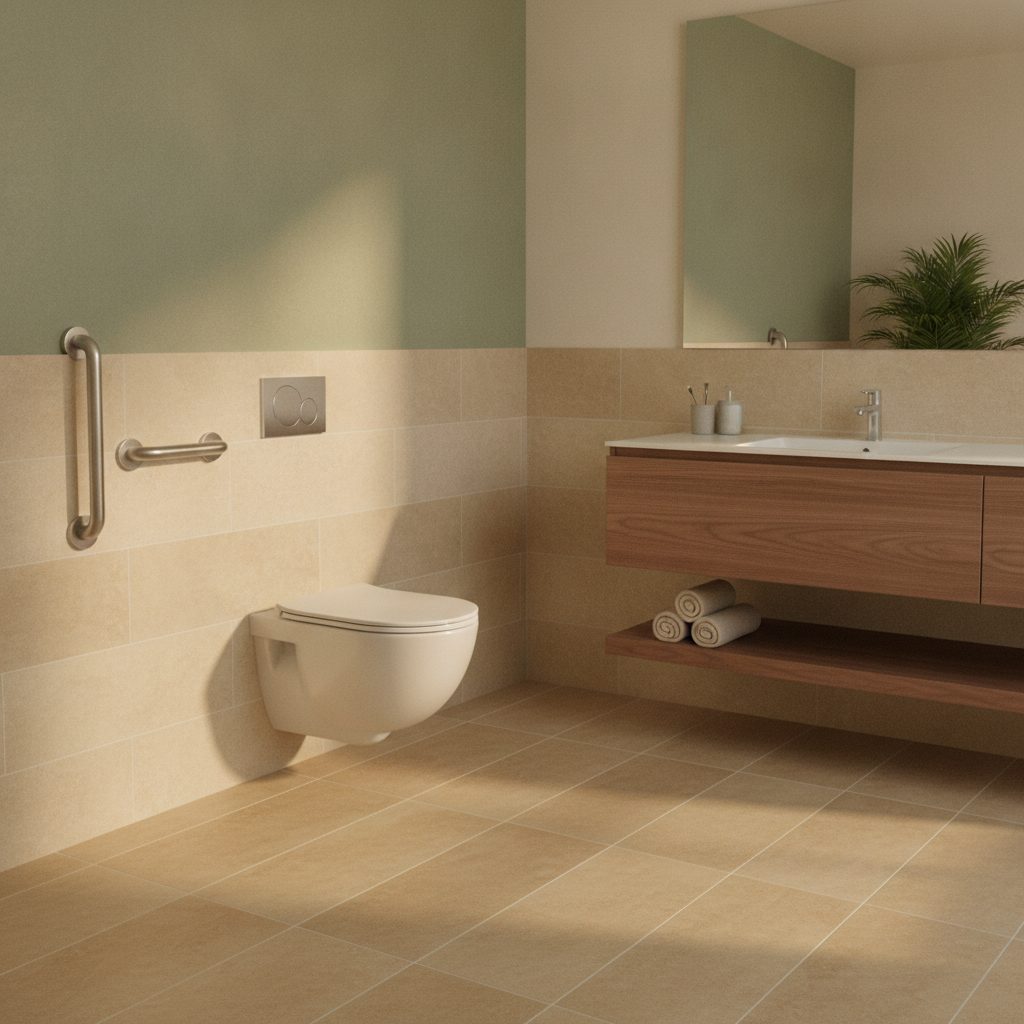
For most Central Texas homes, swapping a standard toilet for a comfort-height model is a straightforward project. Here is what to expect when you work with us:
-
Free in-home assessment
We visit your home, measure the existing toilet and the floor space around it, ask about your mobility and any household members who use the bathroom, and look at the plumbing rough-in distance (typically 10, 12, or 14 inches from wall to drain center — this determines which toilets will fit your space without moving the drain).
-
Fixture selection
We recommend specific models that match your rough-in, fit your budget, and hit the right seat height for your body. We discuss features like elongated vs round bowl (elongated is easier to sit on for most adults), single vs dual flush, and whether a bidet seat is worth considering.
-
Installation day
We protect your floors, remove the old toilet, inspect the flange and subfloor, set the new fixture, and test for leaks and flush performance. Most installations are complete in two to four hours. We clean up completely before we leave.
-
Grab bar placement (recommended)
A comfort-height toilet is significantly more effective when paired with properly located grab bars. We can locate wall studs, mount grab bars rated for the appropriate load, and position them at the heights that work best for how you stand and sit. Learn more on our grab bars and bathroom safety page.
Cost of Comfort-Height Toilet Installation in Central Texas
We do not publish fixed prices online because every project is different. Factors that affect cost include the toilet model you choose, the condition of the existing flange and subfloor, whether we are also adding grab bars or making other bathroom changes, and your specific location in the Austin metro and Hill Country area.
What we can tell you: replacing a toilet is among the most affordable accessibility upgrades you can make, and the combination of a new comfort-height toilet plus two or three grab bars is one of the highest-impact, lowest-cost changes in aging-in-place design. A free in-home assessment gives you an exact quote with no obligation. Call us at (512) 222-8834 or schedule online.
A note on funding
Original Medicare generally does not cover toilet replacements or home modifications. Some Medicare Advantage plans offer limited home-safety benefits — verify your specific plan details. The Texas Medicaid STAR+PLUS Home and Community Based Services (HCBS) waiver can cover Minor Home Modifications for eligible members. Veterans may qualify for the VA Home Improvements and Structural Alterations (HISA) grant for medically necessary modifications — verify current VA figures directly with the VA or a VA-accredited claims agent.
We help with paperwork where we can; this is not medical, legal, or financial advice — verify current program details with the relevant agencies. See our full Texas home modification funding guide for more information.
Who Should Consider a Comfort-Height Toilet
You do not need a diagnosis or a doctor's note to benefit from a comfort-height toilet. Most aging-in-place professionals recommend making the switch as a proactive step — before a fall, before a diagnosis, before a crisis. That said, a comfort-height toilet is particularly valuable if you or a family member:
- Has arthritis in the hips, knees, or lower back
- Has had a hip or knee replacement
- Uses a wheelchair or walker
- Has Parkinson's disease, MS, or another condition affecting balance or coordination
- Has had a stroke with lasting effects on strength or mobility
- Is recovering from surgery and expects to return home
- Simply finds the current toilet difficult to use — no other explanation needed
We also see adult children of aging parents use this guide when they are starting to think about what their parents' home needs. If you are in that situation, we are glad to do a whole-home assessment that looks at the bathroom and everything else. A single visit often surfaces three or four affordable changes that significantly reduce fall risk and support independence for years.
Serving Austin, Dripping Springs, and All of Central Texas
We serve homeowners across the Austin metro area, the Hill Country, and Central Texas — including Dripping Springs, Georgetown, Round Rock, Cedar Park, Kyle, Buda, San Marcos, New Braunfels, Wimberley, Marble Falls, Burnet, Llano, and the surrounding communities. If you are not sure whether we come to your area, just ask. Our service territory covers a wide region, and we make every effort to reach families who need our help.
If you would like to talk through your specific situation before scheduling, call or text us at (512) 222-8834. We will answer your questions plainly and honestly — no pressure, no sales script.
Frequently Asked Questions
What is the ADA-required toilet seat height?
The ADA Standards for Accessible Design require the toilet seat height to be between 17 and 19 inches above the finished floor, measured to the top of the seat. This range accommodates most wheelchair transfers and reduces the effort needed to sit down and stand up for people with limited leg strength or joint pain.
What is a comfort-height toilet and how is it different from ADA?
Comfort-height toilets (also called chair-height or right-height toilets) are manufactured to a seat height of approximately 17 to 19 inches — the same range as ADA requirements. The terms are often used interchangeably by manufacturers, but not every comfort-height toilet carries formal ADA certification. For a home, the practical seat height is what matters most, not the certification label, unless the bathroom will also serve the public or a federally funded facility.
What is the seat height of a standard toilet?
Standard toilets have a seat height of roughly 15 to 16 inches. That extra 2 to 4 inches down to a standard toilet may not seem like much, but for anyone with arthritis, hip replacement, knee pain, or reduced core strength, that depth can make sitting down and getting back up genuinely difficult and even dangerous.
Is a taller toilet always better for older adults?
Not always. A toilet that is too tall — above 19 inches — can leave a shorter person's feet dangling, which strains the lower back and makes it harder to use the abdominal muscles needed for elimination. The 17-to-19-inch range is designed to work for most adults. A CAPS professional can measure your individual proportions and recommend the exact seat height that matches your body and mobility.
Do I need ADA-certified fixtures in my own home?
No. The ADA's specific accessibility requirements apply to public accommodations and commercial facilities, not private residences. However, the ADA height standards (17–19 inches) are widely recognized as the most ergonomic range for aging-in-place design. Many homeowners choose fixtures that meet those standards because they work better, not because the law requires it.
What other bathroom changes should I make alongside a new toilet?
A comfort-height toilet works best when paired with strategically placed grab bars on the side wall and behind the toilet. These let you lower yourself with control and push back up safely. We also look at floor clearance around the toilet, whether the door swing creates a hazard, and whether a bidet seat might reduce the need to twist or reach. Our free in-home assessment covers all of these together.
Can Medicare or Medicaid help pay for a new toilet?
Original Medicare generally does not cover toilet replacements or home modifications. Some Medicare Advantage plans offer limited home-safety benefits — verify your specific plan. The Texas Medicaid STAR+PLUS Home and Community Based Services (HCBS) waiver can cover Minor Home Modifications for eligible members. Veterans may qualify for the VA Home Improvements and Structural Alterations (HISA) grant for medically necessary modifications — verify current VA figures directly. We help with paperwork; this is not medical, legal, or financial advice — verify current program details.
How long does toilet replacement take?
For most homes, replacing a toilet with a comfort-height model is a single-day project — often completed in two to four hours. If we are also installing grab bars, adjusting floor clearance, or addressing any plumbing updates, we schedule accordingly. We protect your floors, clean up fully, and make sure everything is tested before we leave.
What makes a toilet ADA compliant?
For a toilet to be fully ADA compliant in a commercial or public setting, it must meet the ADA Standards for Accessible Design on several points: seat height of 17–19 inches, a minimum 60-inch clear floor space beside the toilet for side transfers, grab bars on the side wall (42 inches minimum) and rear wall (36 inches minimum) mounted 33–36 inches above the floor, flush controls on the open side operable with a closed fist, and a toilet paper dispenser positioned 7–9 inches in front of the seat at 15–48 inches high. In a private home, none of these are legally required — but following ADA compliant toilet standards is strongly recommended because the research behind them reflects what actually works for older adults and wheelchair users.
What are the ADA toilet requirements?
The ADA Standards for Accessible Design set five main requirements for toilets in public and commercial restrooms: a seat height of 17–19 inches; a minimum 60-inch clear floor space beside the toilet for a side transfer, with the toilet centerline 16–18 inches from the side wall; grab bars — a 42-inch bar on the side wall and a 36-inch bar behind the toilet, mounted 33–36 inches above the floor; flush controls on the open side of the toilet, operable with a closed fist; and a toilet paper holder positioned 7–9 inches in front of the toilet, 15–48 inches above the floor. A private home is not legally required to meet these standards, but they represent decades of research into what works best for older adults and wheelchair users, which is why most aging-in-place professionals recommend them as targets even outside a commercial setting.
What is ADA toilet rim height?
ADA §604.4 specifies 17–19 inches measured from the finished floor to the top of the seat. The bowl rim may be lower. Check the installed height including the selected seat. See the U.S. Access Board guidance.
Ready to make the switch?
Our home-accessibility team serves Austin, Dripping Springs, and all of Central Texas. We will visit your home, take measurements, answer every question, and give you a clear, honest quote — at no charge and with no obligation.
- Comfort-height and ADA toilet installation
- Grab bar placement and installation
- Full accessible bathroom remodels
- local family-owned — Project-specific planning
Have questions? We are happy to talk.
Call or text us — no robots, no runaround. You will speak with someone who knows accessibility remodeling and knows Central Texas.