
Residential Elevators & Vertical Platform Lifts in Central Texas

Your home has more than one floor — that shouldn't mean you can only live on one of them. We install residential elevators and vertical platform lifts that let you reach every level safely, on your own terms, for as long as you want to stay home.

Quick answer: A residential elevator travels inside an enclosed cab between floors and suits multi-stop, whole-home access. A vertical platform lift (VPL) is an open platform that rises straight up — lower cost, smaller footprint, and ideal for one- or two-stop applications like a hillside garage or deck. Live Oak Home Access installs both across Austin, Lakeway, the Hill Country, and Central Texas, with full permit management and a fixed written quote.

Aging-in-Place Solutions for Multi-Level Homes

Many of the homes we work on across Lakeway, Canyon Lake, and the Hill Country were built on hillsides or with bedrooms upstairs. For years, that layout worked fine. Then something changes — a knee replacement, a balance issue, a fall — and the stairs become the wall between you and the life you built in your home.

A residential elevator or a vertical platform lift removes that wall. These are real, durable solutions designed specifically for homes like yours. We handle everything: the structural evaluation, permits, installation, and cleanup. When we leave, you can move freely through your own home again.

  • CAPS-certified, OT-informed design — built around how you actually live
  • Residential elevators and vertical platform lifts — we recommend the right fit
  • Full permit management across Travis, Hays, Comal, Burnet & Llano counties
  • Licensed & insured, EPA Lead-Safe, workmanship warranty included
  • We protect your floors and clean up every day

No obligation. We come to you, anywhere in Central Texas. Curious about cost? See our Central Texas Accessibility Cost Guide.

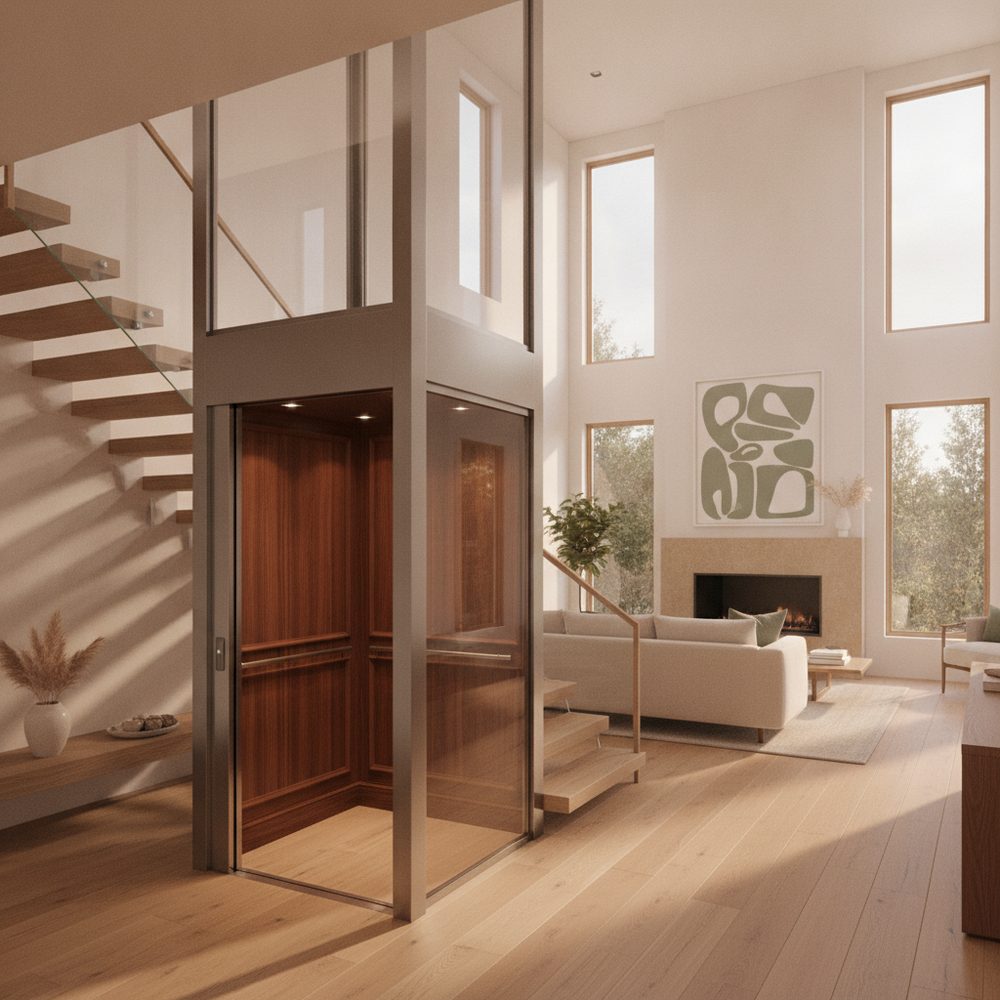
Compact residential elevator with wood-panel cab and glass door installed in a Central Texas multi-level home — CAPS-certified installation by Live Oak Home Access
CAPS-Certified Free Assessment

Signs a Lift or Elevator May Be Right for You

You don't have to be in a crisis to benefit from a home elevator or vertical platform lift. Many families start the conversation well before it becomes urgent — and that's the right time to plan.

For the person who wants to stay home

  • Your bedroom or bathroom is upstairs and stairs have become something you dread or avoid.
  • You use a wheelchair, rollator, or walker and the stairs simply aren't safe anymore — or aren't possible at all.
  • You've had a fall on the stairs, or a close call. One fall changes everything; we'd rather help you prevent the next one.
  • You've had a stroke, a joint replacement, or a Parkinson's diagnosis and balance or leg strength has changed. Stairs demand balance and bilateral leg power — an elevator or platform lift removes that demand entirely.
  • You're planning ahead. You love your home and want to stay. A residential elevator now means you won't have to make a harder decision later.

For adult children thinking about Mom or Dad

  • Your parent's home has multiple levels and you've watched them grab the wall or the railing to get upstairs.
  • A recent hospitalization or rehab stay has changed their mobility, and coming home to a multi-story house feels risky.
  • You live out of town and need to know the house itself is set up so they can manage safely on their own.
  • The garage is below the main living level — common in Lake Travis hillside homes — and getting from the car to the kitchen is already a struggle.
  • You want a solution, not just a band-aid. A properly installed elevator or lift is a permanent, code-compliant modification that adds lasting value to the home.

What We Install: Your Options Explained

Not every home needs the same solution. We carry and install multiple product types so we can recommend what actually fits your home's structure, your budget, and the way you move through your day.

Residential Elevators

A fully enclosed cab that travels between floors inside your home. Drive options include cable-drum, hydraulic, and pneumatic (vacuum) systems. Pneumatic elevators have a smaller structural footprint and are popular in Hill Country homes where hoistway space is limited. Cable and hydraulic systems offer a quieter, smoother ride and are better suited to homes with more than two stops. All residential elevators we install are permitted and meet current safety codes. Cab finishes range from practical to high-end — we match the look to your home's interior.

Ask us about pneumatic options →

Vertical Platform Lifts (VPL)

An open or semi-enclosed platform that rises straight up — through a floor opening or alongside a deck or porch. VPLs cost less than a full elevator and require less structural modification. They are ANSI/ASME A18.1-compliant and can accommodate power wheelchairs, scooters, and walkers. Ideal for one- or two-stop applications: garage-to-living-level, porch access, or split-level interiors. Outdoor-rated models handle the Central Texas heat and occasional freeze without issue. Controls are simple, large-button panels operable with limited hand strength.

Compare with stair lifts in our guide →

Inclined Platform Lifts

Where a straight vertical rise isn't possible — a staircase along an exterior hillside, or a curved interior stair — an inclined platform lift travels along a rail mounted to the stairs and carries a folding platform large enough for a wheelchair. This gives wheelchair users access on staircases that a traditional stair lift (designed for a seated, ambulatory user) cannot serve. We assess your staircase geometry and recommend the right solution. Not sure whether you need a stair lift or a platform lift? We walk you through the differences during the free assessment at no cost.

See stair lifts for seated users →

Not sure which type is right for your home? Our guide Stair Lift vs. Home Elevator: Which Is Right for Your Texas Home? breaks down the key differences in plain language — drive systems, cost, structural requirements, and who each solution fits best.

Recent Projects in Central Texas

Every home is different. Here are examples of the kinds of installations we complete for families across the Austin metro and Hill Country.

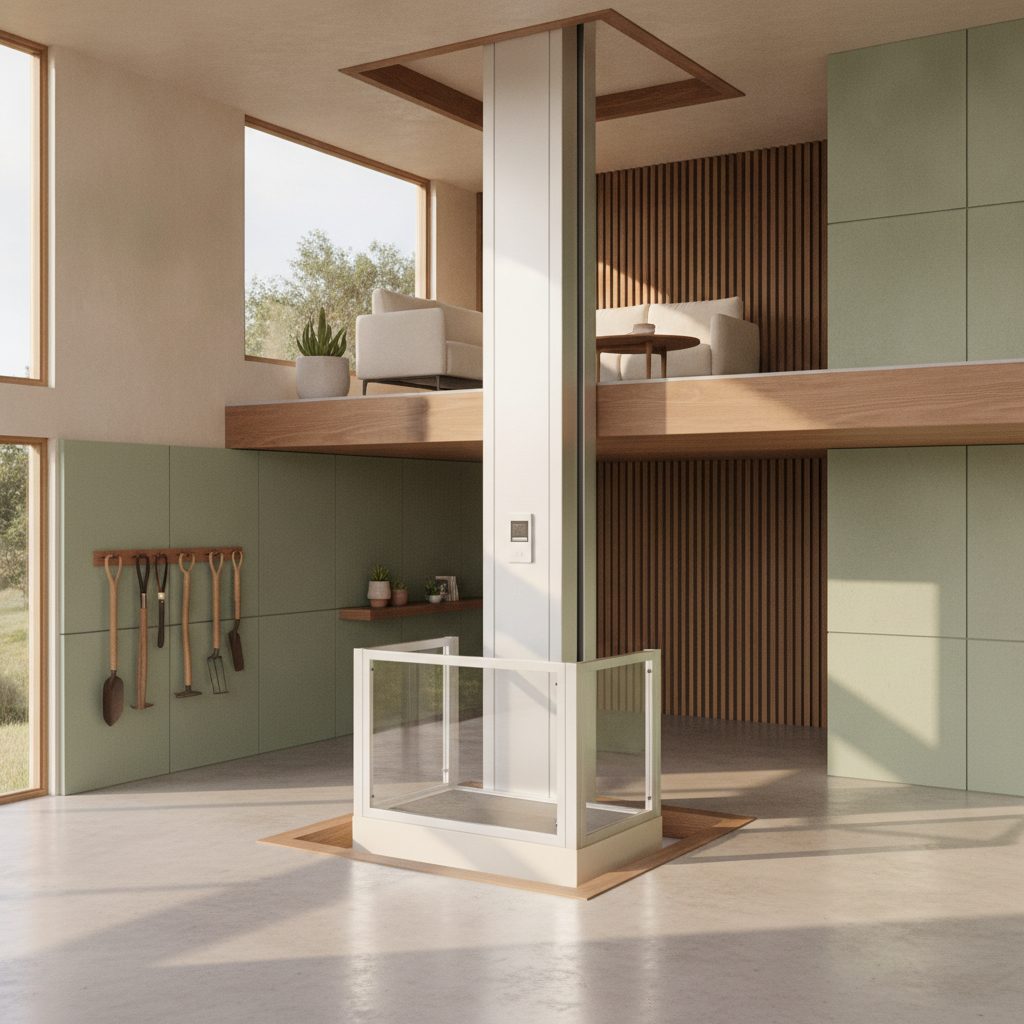
A vertical platform lift installed in a hillside home garage, serving two levels
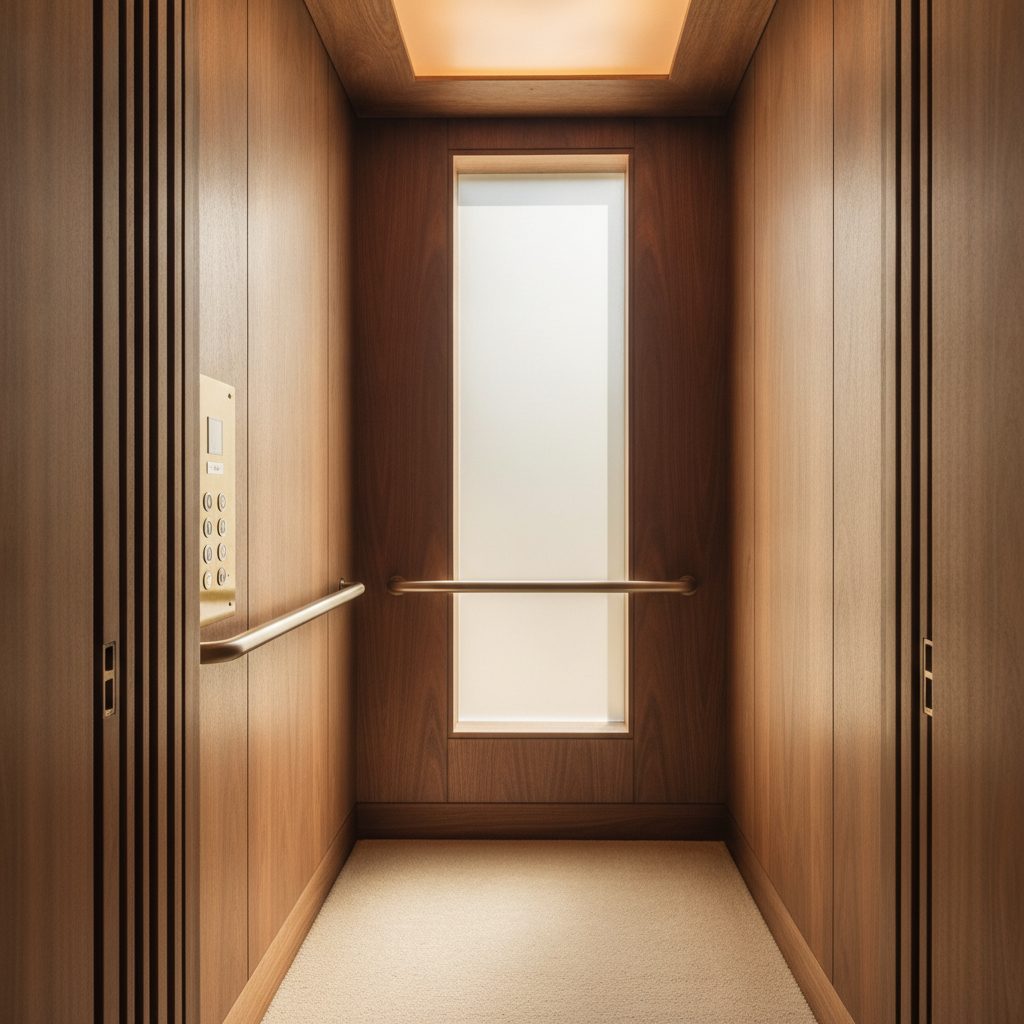
The interior of a compact residential elevator cab with a wood-grain panel and handrail in an Austin-area home

Our Process: From First Call to First Ride

Installing a home elevator or platform lift in an existing home is a real construction project. We make it straightforward and predictable, with no surprises on cost or timeline.

  1. 1

    Free In-Home Safety Assessment

    A CAPS-certified member of our team visits your home — no cost, no obligation. We look at your floor plan, ceiling heights, available closet or wall space, structural framing, and your specific mobility needs. We discuss all product options and give you honest guidance on what will work in your home. This typically takes 60–90 minutes.

  2. 2

    Fixed Written Quote

    Within a few days of your assessment, you receive a detailed written quote covering equipment, structural modifications, permits, installation labor, and cleanup. Our quotes are fixed — what we quote is what you pay. We don't add surprise line items after the job starts.

  3. 3

    Permit Management

    We pull all required permits for your county — Travis, Hays, Comal, Burnet, Llano, Williamson, or wherever you are in Central Texas. Home elevators and vertical platform lifts require permits in virtually all jurisdictions; we handle this as part of every project, not as an add-on.

  4. 4

    Professional Installation

    Our crews protect your floors with drop cloths and construction mats every day. We work cleanly and communicate with you throughout. Structural work, hoistway construction, equipment installation, electrical connections, and finish work are all handled by our licensed team — we don't subcontract the critical parts. At the end of each work day, we clean up and restore your home to livable condition.

  5. 5

    Inspection & Orientation

    After installation we schedule the required municipal inspection. Once approved, we walk you — and any family members you'd like present — through full operation of your new lift or elevator. We cover normal use, safety features, what to do if you have a question, and routine maintenance basics.

  6. 6

    Workmanship Warranty & Follow-Up

    Every installation includes our workmanship warranty. We also coordinate manufacturer warranty registration on your behalf. We check in after 30 days and remain your point of contact for any questions — you don't get handed off to a call center.

Typical Home Elevator Cost in Central Texas

Residential elevator cost in Central Texas varies widely based on drive system, number of stops, cab finish level, and how much structural preparation your home requires. The table below gives a general orientation — not a quote, but a starting point for planning.

Solution Typical installed range (Central TX) Best for
Vertical platform lift (indoor, 1–2 stops) Lower end of the range Garage-to-living level; deck/porch access; wheelchair users
Pneumatic (vacuum-drive) residential elevator Mid range Homes with limited hoistway space; 2–3 stops; contemporary look
Cable-drum or hydraulic residential elevator Mid to upper range 3+ stops; quietest ride; traditional home styles
Inclined platform lift Varies by stair geometry Wheelchair users on straight or curved staircases

We don't publish exact prices because the installed cost is too home-specific to be meaningful without seeing your space. A pneumatic elevator in a home that already has a suitable closet costs far less than the same unit in a home that needs a new hoistway built from scratch. The only number that matters is the one in your written quote — and that comes free, with no obligation, after our in-home assessment.

For broader context on what accessibility modifications cost across Central Texas, see our Central Texas Accessibility Cost Guide — it covers typical ranges for all the modifications we install, in plain language.

Funding & Financial Assistance

A residential elevator or vertical platform lift is a meaningful investment. Here is an honest summary of the funding sources that sometimes apply — and what you should know about each.

  • Original Medicare: Generally does not cover residential elevators or platform lifts. Some Medicare Advantage plans offer limited home-safety or home-modification benefits — verify your specific plan with your plan administrator.
  • VA HISA Grant (Home Improvements and Structural Alterations): Eligible veterans may use VA HISA funding for medically necessary home modifications. Verify current VA HISA grant amounts and eligibility requirements directly with the VA or with our team — figures change and must be confirmed with the VA.
  • Texas Medicaid STAR+PLUS HCBS Waiver — Minor Home Modifications: Qualifying Medicaid recipients may be eligible for minor home modification benefits under this waiver. We can help identify whether this may apply to your situation.
  • Long-term care insurance: Some policies cover home modification — review your policy or ask your insurer.
  • Home equity and renovation financing: We can point you toward lenders who specialize in home accessibility financing.

We help with paperwork and can walk you through the application process — but this is not medical, legal, or financial advice. Please verify current program details and eligibility requirements with the relevant agency or a qualified advisor.

For a full breakdown of every funding source available in Texas, visit our Home Modification Funding Guide for Texas.

Why Families in Central Texas Choose Us

CAPS-Certified & OT-Informed Design

Our lead installer holds the Certified Aging-in-Place Specialist (CAPS) credential from the National Association of Home Builders — the recognized professional standard for aging-in-place modifications. We design every project around how you actually move through your home, informed by occupational therapy principles. That means the controls are where your hand reaches naturally, the platform dimensions match your chair, and the landing areas are clear and stable.

Licensed, Insured & EPA Lead-Safe

We are fully licensed as a general contractor in Texas and carry the insurance your home — and your peace of mind — deserve. Our team is EPA Lead-Safe certified, which matters in homes built before 1978 where renovation work can disturb lead paint. We follow all required containment and disposal protocols on every project, regardless of home age.

Family-Owned & Locally Based

We are headquartered in Dripping Springs and we serve the communities around us — not accounts in a regional territory. Michael Chandler, CAPS, runs every project and is reachable by phone and text. You are never handed off to a project manager you've never met. When something comes up — and in construction, something always does — you call the same person who gave you the original quote.

Fixed Quotes & Workmanship Warranty

Our written quotes are fixed. We do not add fees after work begins unless you ask for a scope change and we give you a written change order first. Every installation includes our workmanship warranty — if something we built or installed fails due to our work, we come back and make it right at no charge. We also register your equipment warranty with the manufacturer on your behalf.

Related Services & Guides

A complete aging-in-place plan often includes more than one modification. Here are the services and resources our elevator and platform lift clients most commonly pair with this work.

Stair Lifts

If you can walk but stairs have become unsafe, a stair lift may be a lower-cost alternative to a full elevator. It carries you seated along the stair rail. Learn more about stair lifts and when they're the better fit on our stair lift service page.

Serving Lakeway & the Lake Travis Area

Lake Travis hillside homes present unique challenges — steep terrain, garage-below-living layouts, and long staircases. See how we serve this community and the specific solutions we use most often here.

Proudly Serving Seniors Across Central Texas

Residential elevators and vertical platform lifts are particularly popular in communities with significant senior populations and multi-level homes. We install them regularly in Georgetown and Sun City Georgetown, where the active-adult community includes many split-level and two-story homes; in Lakeway and Bee Cave along Lake Travis, where hillside lots mean the garage is often one full story below the living area; in Canyon Lake and the surrounding Hill Country, where weekend homes and retirement retreats often sit on dramatic terrain; and throughout Dripping Springs, Wimberley, Marble Falls, and Burnet in the Hill Country proper.

Wherever you are in Central Texas, if you're living on more than one level and stairs have become a concern, we want to talk with you. Call or text us at (512) 797-6518, or request a free in-home assessment online.

Frequently Asked Questions

Answered by Michael Chandler, Certified Aging-in-Place Specialist (CAPS)

What is the difference between a residential elevator and a vertical platform lift?

A residential elevator travels inside a fully enclosed cab with walls, a door, and smooth, quiet operation — it looks and feels like a miniature commercial elevator. A vertical platform lift (VPL) is an open or semi-enclosed platform that rises straight up through a floor opening or alongside a porch or deck. VPLs cost less to purchase and install and require a smaller structural footprint. Elevators offer more privacy and weather protection; VPLs are well-suited for short rises, garages, and outdoor use. During your free in-home assessment we walk you through both options so you can choose what fits your home and your budget.

How much does a home elevator cost in Central Texas?

Residential elevator cost in Central Texas typically ranges from roughly $20,000 to $50,000 or more for a complete, installed unit — the final number depends on the number of stops, the drive system, cab finish level, and the structural work your home requires. Vertical platform lifts generally run less. These are typical Central Texas ranges; a free in-home assessment gives you an exact quote for your home with no obligation.

Do I need to modify my home's structure to add an elevator?

Almost always, yes — but the scope varies widely. Some homes can use a pneumatic (vacuum-drive) elevator that requires only a modest ceiling penetration. Others need a dedicated hoistway built inside a closet or along an exterior wall. During your assessment, our CAPS-certified team evaluates your framing, ceiling heights, and available space and designs the least-disruptive path for your specific home. We handle permitting and work with your home's existing structure whenever possible.

Can a vertical platform lift be used outdoors or in a garage?

Yes. Many of our Central Texas clients use vertical platform lifts to bridge a hillside garage floor to the main living level, or to access a deck or porch from grade. Outdoor-rated VPLs are built with weatherproof drive components and slip-resistant platforms. We size and specify the right unit for your climate and usage and obtain all required permits.

Will a home elevator or platform lift help if I use a wheelchair or rollator?

Absolutely — that is one of the most common reasons our clients choose a vertical platform lift or a residential elevator. Both can be configured to accommodate a power wheelchair. Lifts and elevators typically allow a wheelchair user to ride independently without assistance. We confirm all measurements — turning radius, platform dimensions, door width, and weight capacity — against your specific mobility equipment during the in-home assessment.

Does Medicare or insurance pay for a home elevator?

Original Medicare generally does not cover residential elevators or vertical platform lifts. Some Medicare Advantage plans offer limited home-safety or home-modification benefits — verify your specific plan. The VA Home Improvements and Structural Alterations (HISA) grant can help eligible veterans cover medically necessary modifications; verify current VA figures directly with the VA or our team. Texas Medicaid STAR+PLUS HCBS Minor Home Modifications may also apply in qualifying cases. We help with paperwork — not medical, legal, or financial advice — so please verify current program details with the relevant agency.

How long does installation take?

A vertical platform lift installation typically takes one to three days once permits are approved. A residential elevator with a new hoistway generally takes one to two weeks. The exact timeline depends on structural preparation needed, equipment lead times, and permit processing speed in your county. We give you a realistic project schedule before any work begins and keep you updated throughout.

What is a platform stair lift for home use — and how is it different from a regular stair lift?

A platform stair lift (also called an inclined platform lift) is a stair-mounted lift that carries a full-size platform — large enough to hold a wheelchair or scooter — along a rail on the staircase. A standard stair lift carries only a seat, designed for someone who can stand and transfer. If you or a family member uses a wheelchair and cannot transfer out of it on the stairs, a platform stair lift for home is the right solution. They are available for straight and curved staircases and can serve both indoor and outdoor stairs. We assess your staircase geometry during the free in-home assessment and recommend the right lift type for your mobility equipment and your home's layout. Compare all options in our Stair Lift vs. Home Elevator guide.

Ready to Move Freely Through Your Home Again?

A free in-home assessment costs you nothing and gives you a clear picture of your options, a fixed written quote, and honest answers to every question. We come to you — anywhere in the Austin metro, the Hill Country, or Central Texas.

Or text us at (512) 797-6518 — we respond the same business day.