

Stair Lift, Home Elevator or Platform Lift?
A stair lift, a residential elevator, and a vertical platform lift each solve the same problem differently. Here is what sets them apart — and how to choose the right one for your staircase, your budget, and your needs.
By Drew Chandler — Home Accessibility & Project Coordination · Updated 2026-09-16
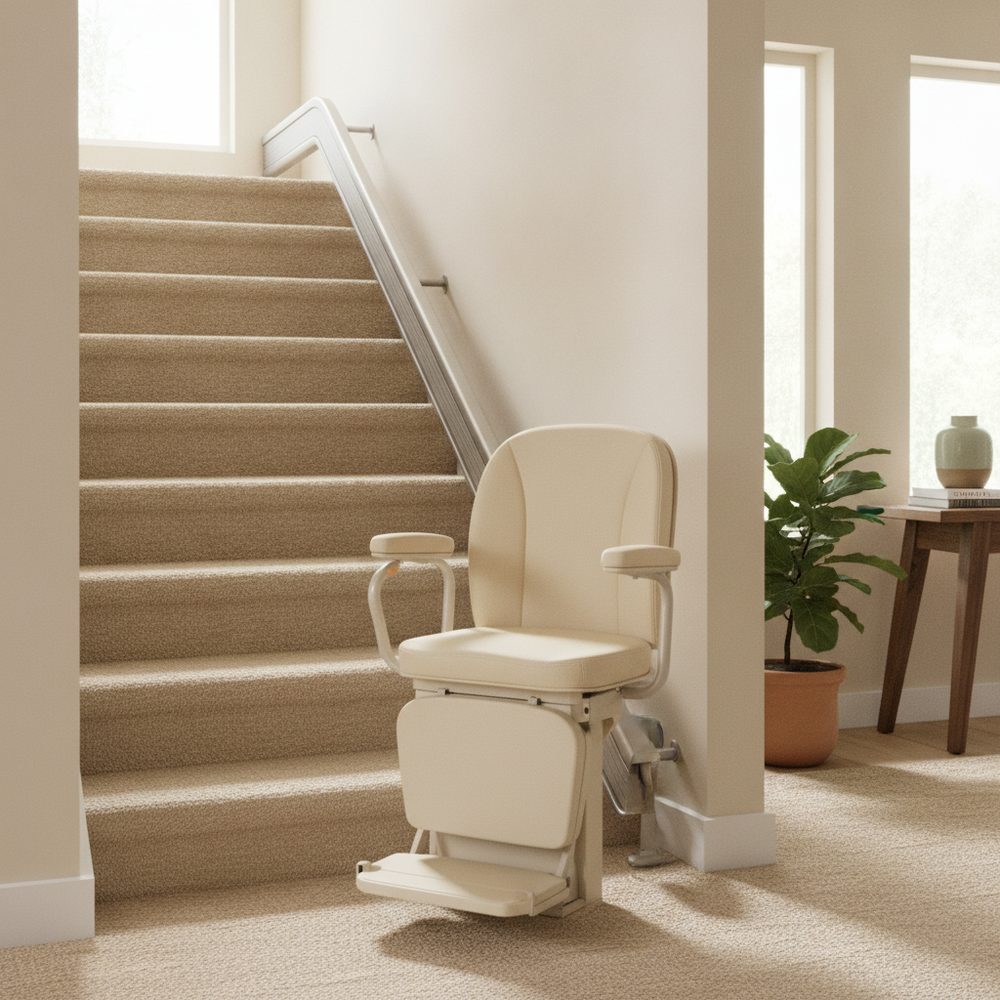
For most Central Texas homeowners with a single straight staircase and no wheelchair, a stair lift is the fastest and most affordable solution — typically the lowest installed cost of the three and done in a day. If you use a wheelchair or power chair and cannot transfer, a vertical platform lift or residential elevator is the right choice. A home elevator offers the most seamless long-term experience and may add the most resale appeal, but it also involves the most construction, the longest timeline, and the highest cost.
Why this decision matters
The stairs are often the first thing that makes a person feel like they can no longer stay in the home they love. That does not have to be true. Whether your bedroom is upstairs in an Austin craftsman, you have a split-level Hill Country home, or you are watching a parent struggle to climb to the second floor, there is a practical, dignified solution available.
When comparing a stair lift vs a home elevator vs a platform lift, the right answer depends on four things: whether the rider uses a wheelchair, what your staircase looks like, your budget, and how long you plan to stay in the home. This guide covers every factor so you can make a confident decision — and have a productive conversation with a specialist.
The three options at a glance
Stair lifts
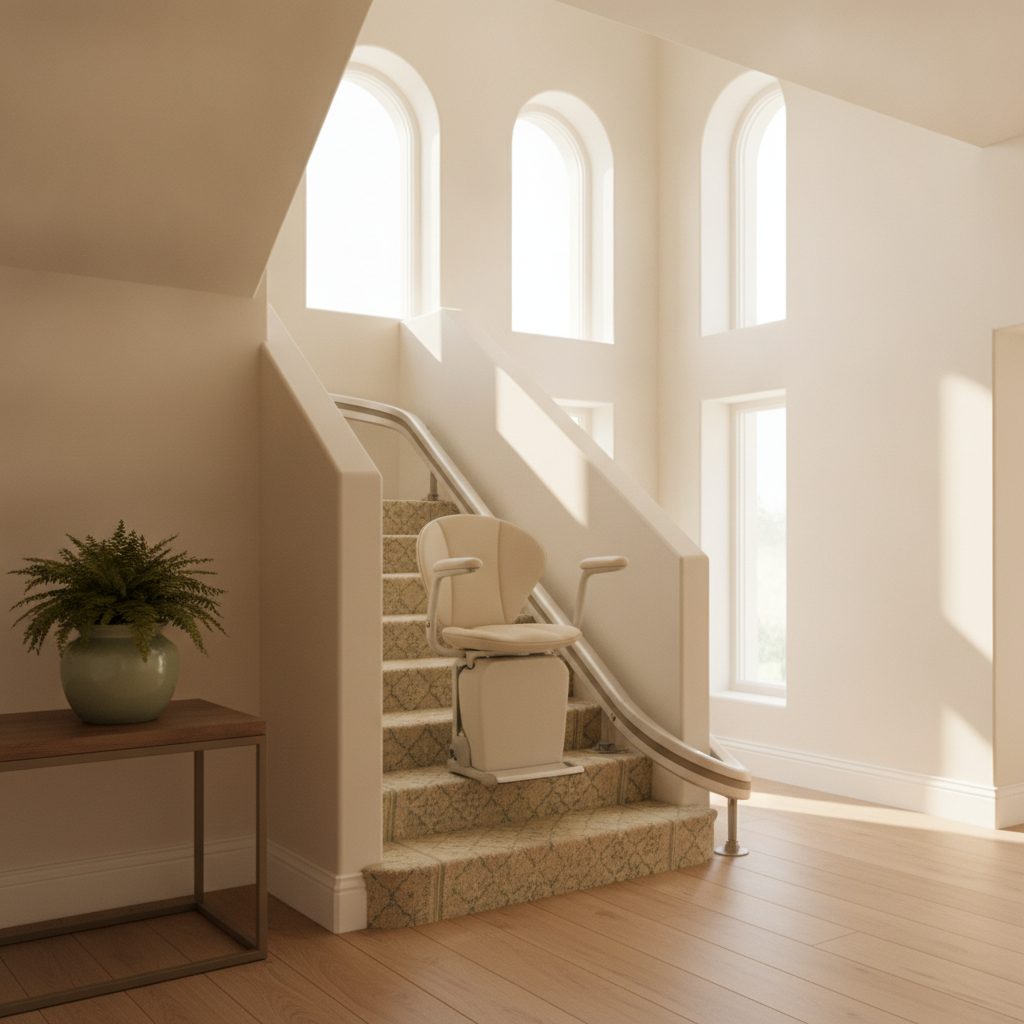
A stair lift is a motorized chair that travels up and down a rail mounted to the stair treads — not the wall. You sit, buckle a seat belt, and press a button. Most models fold flat when not in use so others can still use the stairs. They come in straight-rail and curved-rail configurations. Straight rails are simpler and less costly. Curved rails are custom-fabricated to match your staircase and cost considerably more.
Stair lifts are well-suited for people who can transfer safely — meaning they can stand from a chair, pivot, and sit on the lift seat without assistance, or with minor assistance from a caregiver. They are not designed to carry a wheelchair. Most standard models have a weight capacity of 300–350 lb; bariatric versions go higher.
Learn more about the lift options we offer on our stair lifts service page.
Vertical platform lifts
A vertical platform lift (VPL) is essentially a small open-air elevator that travels straight up and down — typically between a garage floor and a living level, between a porch and an entryway, or between two full floors. The platform is large enough for a wheelchair or scooter and the person riding it. There is no enclosed cab; you ride on an open platform with safety gates.
VPLs are excellent when you need to move a wheelchair — or when a person simply cannot transfer. They require less construction than a full residential elevator and less vertical space than a stair lift on a long staircase. They are most common in single-rise situations (garage to entry, porch to front door) but can handle full-floor-to-floor rises in the right home layout.
Residential elevators
A residential elevator is a fully enclosed cab that moves between floors inside a shaft or hoistway. It feels the most like a commercial elevator: doors, a small cab, push-button controls. Modern residential elevators come in several drive types:
- Hydraulic: A piston and pump system. Requires a machine room. Very smooth ride. Common in new construction.
- Cable/traction: A counterweight and cable system. Can fit in smaller footprints. Common retrofit choice.
- Pneumatic (vacuum): Air pressure moves the cab inside a transparent cylinder. No shaft or machine room needed. Lower construction impact — ideal for retrofits. Capacity is more limited than hydraulic or cable models.
- Drive-screw/worm-drive: A threaded rod drives the cab. Quiet, compact, and fairly easy to retrofit into an existing closet or corner.
Residential elevators require a building permit in Texas, a structural assessment of the floor opening, electrical work, and in many cases modifications to the ceiling of the lower floor. The process is more involved but the result is the most integrated, long-term solution available. For more on what we offer, visit our residential elevators and platform lifts page.
Side-by-side comparison
| Factor | Stair Lift | Vertical Platform Lift | Residential Elevator |
|---|---|---|---|
| Typical Central Texas cost range | Lower end — straight rail; curved rail significantly more. Free in-home assessment gives exact quote. | Mid-range. Varies by rise height and platform size. | Higher end. Depends on drive type, shaft construction, and number of stops. A free assessment gives exact quote. |
| Installation time | Half day to one full day | One to two days | Several weeks (permitting + construction) |
| Construction required | Minimal — rail mounts to treads, no wall opening | Moderate — platform pit or threshold ramp, gate anchors | Significant — shaft, floor opening, electrical, permit |
| Wheelchair compatible | No — person transfers to seat | Yes — wheelchair rides on platform | Yes — wheelchair fits in cab (check cab dimensions) |
| Curved staircase | Yes, but curved rail adds significant cost | Not applicable — travels vertically | Not applicable — travels vertically |
| Footprint impact | Low — folds flat; staircase still usable by others | Moderate — platform takes floor space at each level | High — permanent shaft uses floor space on every level |
| Maintenance | Annual service, battery check | Annual service | Biannual or annual service contract recommended |
| Power outage behavior | Battery backup on most models | Battery backup on most models | Varies by drive type — ask installer |
| Resale / home value | Can be removed and resold; minimal visual impact | Can add value for mobility-focused buyers | Adds permanent feature; most appeal to 55+ buyers |
| Best for | Can-transfer users; single straight staircase; budget-conscious | Wheelchair users; single-rise between two levels; garages and porches | Wheelchair users; multi-floor access; long-term investment; new construction or major remodel |
Cost figures represent typical Central Texas ranges. A free in-home assessment gives you an exact quote for your home and staircase.
How to choose the right option for your home
Start with your staircase — and your body
The first question is whether the person riding needs to take a wheelchair with them. If the answer is yes, a stair lift is off the table. You need a platform lift or elevator. If the person can safely transfer — stand, pivot, sit — a stair lift is usually the most straightforward and economical path.
Next, look at the staircase itself. A single, straight run of stairs is ideal for a standard stair lift. If your staircase turns a corner, has a landing, or curves, you have two choices: a custom curved stair lift (which requires a longer lead time and a higher investment) or a vertical solution positioned elsewhere in the home — often more practical.
Consider the rise and the floor plan
Vertical platform lifts need a vertical rise between two levels — a garage floor to an entry, or a porch to a front door. They are not designed to travel the full height of a two-story home in most configurations. If you need to move between the ground floor and second floor of a two-story home, a stair lift or a residential elevator is typically the right tool.
Residential elevators can be tucked into corners, closets, or open areas of a floor plan. Pneumatic (vacuum) models have the smallest footprint and construction impact — some need only a standard electrical outlet and a roughly 30-inch-diameter floor opening. They are increasingly popular in Central Texas Hill Country homes where drilling into limestone foundations for a hydraulic piston is impractical.
Think about where you are headed, not just where you are today
Mobility needs often change over time. Someone who transfers easily today may use a wheelchair in five years. A stair lift that perfectly meets your needs right now may not serve you as well in the future. This is why home-accessibility specialists look at the whole picture — not just the immediate problem, but your home's long-term accessibility plan.
If you are doing a larger renovation — a bathroom remodel, a kitchen update, a garage conversion — it is often worth adding an elevator shaft or rough-in at that time, even if you do not install the elevator immediately. The added cost during active construction is far less than tearing into finished walls later.
Curved staircases: a special case
Many homes in the Austin metro and Hill Country have beautiful curved or switchback staircases. Curved stair lifts are available and work well, but they require custom-fabricated rails and a longer manufacturing lead time. If your staircase has a tight radius or multiple curves, a curved lift may be your best stair-mounted option — or a vertical solution positioned in another part of the home may be simpler and more reliable.
During a free in-home assessment, we measure the staircase precisely and tell you exactly what will work and what will not.
Resale value and the aging-buyer market
Texas's senior population is growing fast — the Texas Demographic Center projects the number of Texans age 65 and older will grow more than 88% between 2023 and 2050, nearly doubling — and Central Texas is no exception. (Source: Texas 2036, Understanding Texas' Population Growth, citing Texas Demographic Center projections) Georgetown, Marble Falls, New Braunfels, Wimberley, and communities throughout the Hill Country draw large numbers of retirees looking for homes that can grow with them.
A residential elevator is widely viewed as a premium feature — similar in buyer perception to a three-car garage or a walk-in pantry. In a market with a large pool of 55-plus buyers, an elevator can make your home stand out and may support your asking price. Stair lifts are more neutral: most can be removed and sold separately, leaving the staircase clean for a buyer who does not need one. Neither is a guaranteed appraisal benefit, but both expand the pool of buyers who can comfortably consider your home.
Funding options for Central Texas residents
The cost of a stair lift, platform lift, or residential elevator can feel daunting. Several funding sources may help:
- Original Medicare: Generally does not cover stair lifts, elevators, or platform lifts. Some Medicare Advantage plans offer limited home-safety or home-modification benefits — verify your specific plan.
- VA benefits: HISA covers certain medically necessary home alterations, but the VA excludes stair glides and porch lifts from HISA. Ask your VA Prosthetic and Sensory Aids Service whether a separate benefit may cover the recommended lift, and obtain approval before purchase.
- Texas Medicaid STAR+PLUS HCBS Waiver: May cover minor home modifications for qualifying Medicaid recipients. Ask your case manager about specific covered services.
- Home equity / financing: Many homeowners use home equity loans or lines of credit. Some equipment providers offer financing programs.
We help with the paperwork. This is not medical, legal, or financial advice — verify current program details before applying. See our full Texas home-modification funding guide for a deeper look at each program.
Not sure which option fits your home?
We visit your home, measure the staircase, look at the floor plan, and walk through your needs together — no pressure, no obligation. You leave with a clear recommendation and a written quote.
What the installation process looks like
-
Free in-home assessment
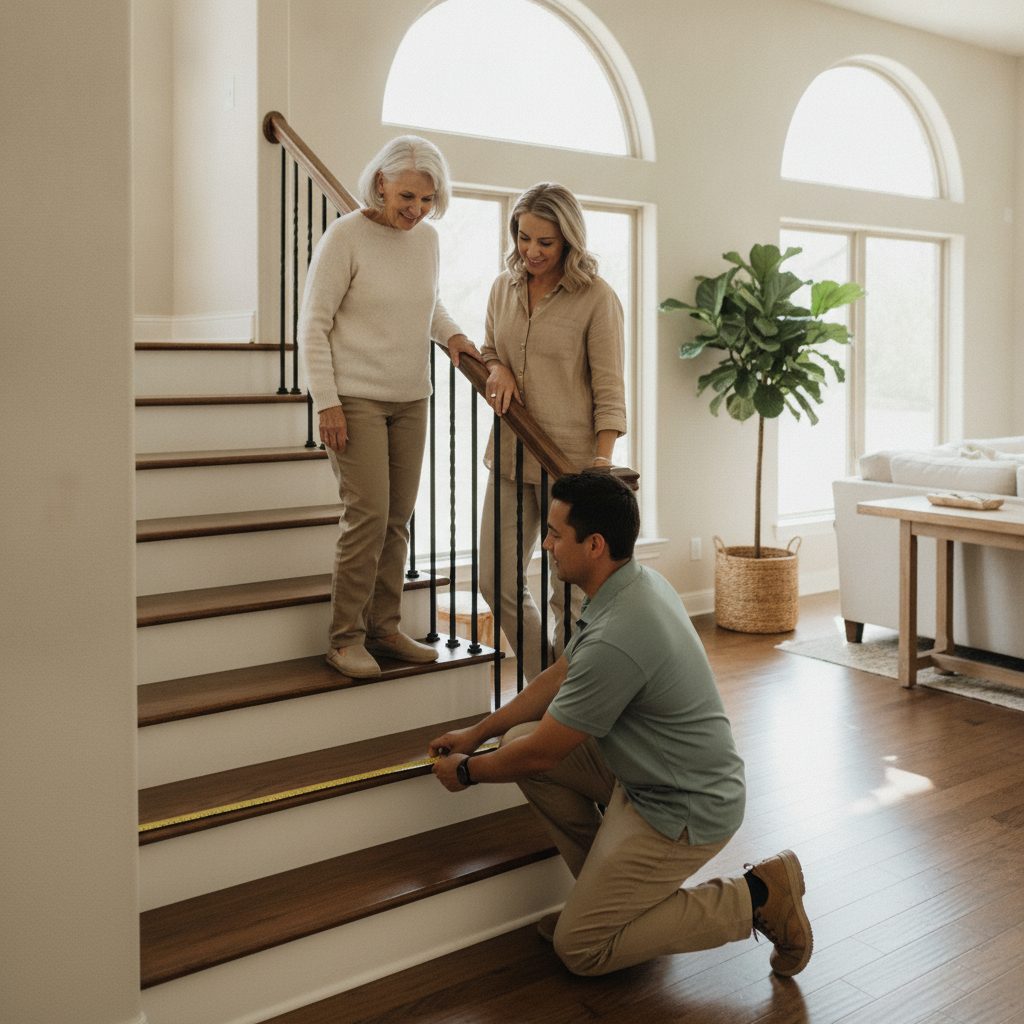
A home-accessibility specialist visits your home, measures your staircase, and evaluates your floor plan and electrical setup. We listen to your needs — and your timeline. You receive a written scope of work and quote before we leave.
-
Equipment selection and ordering
We help you select the right make and model — one that fits your body, your staircase, and your budget. Stair lifts are often in stock or available within days. Curved rails and elevators are ordered to spec and have longer lead times. Not ready to commit to a purchase? See our stair lift rental options for a short-term or trial period.
-
Permitting (elevators and some platform lifts)
Residential elevators require a building permit in Texas. We handle the application, coordinate with the local building department, and schedule inspections. This step does not apply to most stair lifts.
-
Installation
Our crew protects your floors and finishes before we start. We clean up completely each day. Stair lifts are typically done in a single visit. Elevators involve multiple trades and may span several days or weeks depending on scope.
-
Walkthrough and training
Before we leave, we walk you — and any family members or caregivers — through safe operation, emergency procedures, and basic maintenance. We want you to feel completely confident.
Why Live Oak Home Access
Ask us about the coverage and qualifications relevant to your project. Your written scope identifies who performs the work and the applicable warranty terms. Live Oak handles home-accessibility installations and routine upkeep within its scope. For plumbing, electrical, tile and structural work, the homeowner contracts with the appropriate trade partner; we help define the scope and coordinate the work.
We do not push the most expensive option. We recommend the right one. And we are honest when a less costly solution will serve you just as well.
You can also explore our full Central Texas accessibility cost guide to get a better sense of what to expect across all modification types.
Frequently asked questions
Which is cheaper — a stair lift or a home elevator?
In Central Texas, a straight-rail stair lift typically runs less than a residential elevator. Stair lifts have lower equipment and installation costs, while elevators require a shaft or hoistway, structural modifications, and more complex permitting. A platform lift often falls in between. A free in-home assessment gives you exact pricing for your home and stair configuration.
Can a stair lift accommodate a wheelchair?
A standard stair lift carries the person, not the wheelchair — you transfer to the seat, ride up, then transfer back to a wheelchair at the top. A vertical platform lift or residential elevator can carry a wheelchair and its user together, making them a better choice for someone who cannot transfer or who uses a power chair.
Do stair lifts or home elevators add resale value?
Both can appeal to buyers in the large and growing 55-plus market. Elevators are generally seen as a higher-end feature and may add more perceived value, especially in multi-story Hill Country or Austin lake-view homes. Stair lifts can be removed and resold separately when you no longer need them. Neither is a guaranteed appraisal booster — the stronger argument is that these features keep your home marketable to a wider buyer pool.
How long does it take to install a stair lift vs a home elevator?
Most stair lifts are installed in half a day to one full day with minimal disruption. Residential elevators involve more construction — building or modifying a shaft, electrical work, and local permitting — which can take several weeks from design to completion. Platform lifts generally fall in between, often taking one to two days for straightforward installations.
Will Medicare or insurance pay for a stair lift or elevator?
Original Medicare generally does not cover stair lifts, residential elevators, or platform lifts. Some Medicare Advantage plans offer limited home-safety or home-modification benefits — verify your specific plan. VA HISA excludes stair glides and porch lifts. Ask your VA Prosthetic and Sensory Aids Service whether a lift may qualify through a separate VA benefit before buying equipment. Texas Medicaid STAR+PLUS HCBS waiver may cover minor home modifications for qualifying individuals. We help with the paperwork, but this is not medical, legal, or financial advice — verify current program details before applying.
What happens if the power goes out — will I be stuck on a stair lift?
Most modern stair lifts include a battery backup that lets you complete a trip or return to a landing even during a power outage. Residential elevators vary — some hydraulic models can be manually lowered, while traction and pneumatic models have different emergency provisions. Ask your installer about backup power before purchasing any lift system.
Can I install a home elevator in an existing Central Texas home?
Yes, though it requires more planning than a stair lift. Pneumatic (vacuum) elevators and certain cable-driven models have lower structural demands and can fit in existing closets or open floor-plan areas. Traditional hydraulic elevators need a machine room and a proper shaft. A home-accessibility specialist can assess your home's layout, ceiling height, and floor structure to determine which elevator type is realistic and what the permitting process looks like in your county.
Which option is best for someone with a curved or split-level staircase?
Curved stair lifts exist but cost significantly more than straight-rail models and require custom rail fabrication. If your staircase has curves, a landing, or multiple flights, a vertical platform lift or a residential elevator positioned away from the stairs may be more practical and cost-effective. We measure and assess your specific staircase during a free in-home visit so you get the right recommendation for your floor plan.
How much maintenance do stair lifts and home elevators need?
Stair lifts are mechanically simple and typically need annual servicing — lubrication, battery checks, and safety sensor tests. Residential elevators have more components (cable, hydraulic system, or air pump depending on type) and generally benefit from a maintenance contract with the manufacturer or a certified technician, often recommended every six to twelve months. Platform lifts fall closer to stair lifts in maintenance demands.
Are there weight limits I should know about?
Standard stair lift seats typically support up to 300–350 lb; bariatric models are available with higher ratings. Residential elevators and platform lifts have their own rated capacities that vary by manufacturer and model. Confirm the weight capacity — including the wheelchair if applicable — before purchase. Our team will match you with the right equipment based on your needs.
Does Live Oak Home Access install all three types?
Your written scope identifies the work, the responsible provider and the applicable warranty terms. Live Oak installations and separately contracted partner work have separate responsibilities. Ask us to explain these before work begins.
Not sure how you’d pay for it? Find out in minutes — free
Complete the free Funding Check for a preliminary list of programs to review and official sources. Review the preliminary map with our team before making a funding or construction decision. Each program decides eligibility and approval; there is no obligation to buy.
Ready to find the right lift for your home?
A free, no-obligation in-home assessment is the best next step. We visit, measure, and give you a written recommendation and quote — usually within 48 hours of your call. Serving Austin, Dripping Springs, Georgetown, the Hill Country, and all of Central Texas.
Or text us anytime. Clear Written Scope · home-accessibility · Scope & Warranty Terms.