Permits, POAs, and the Realities of Canyon Lake's Terrain
Building or modifying a home in Canyon Lake involves a few layers that don't exist in a standard suburban setting, and we know how to navigate all of them.
Comal County Permits
Permit and inspection requirements depend on the address and proposed work. The trade partner you contract with confirms the required permits and handles them for its scope. Live Oak helps define the project and coordinate the work; confirm any HOA approval requirements before starting.
POA and HOA Architectural Review
Canyon Lake has a patchwork of property owners' associations, and many of them have architectural review processes for changes to the exterior of your home. This includes ramps, railing additions, and in some cases changes to exterior finishes. We're experienced working with POA review boards and can prepare the documentation — drawings, material specs, project descriptions — your association requires. Getting approval in advance keeps your project on track and avoids disputes with neighbors or the association after the fact.
Sloped and Terraced Lots
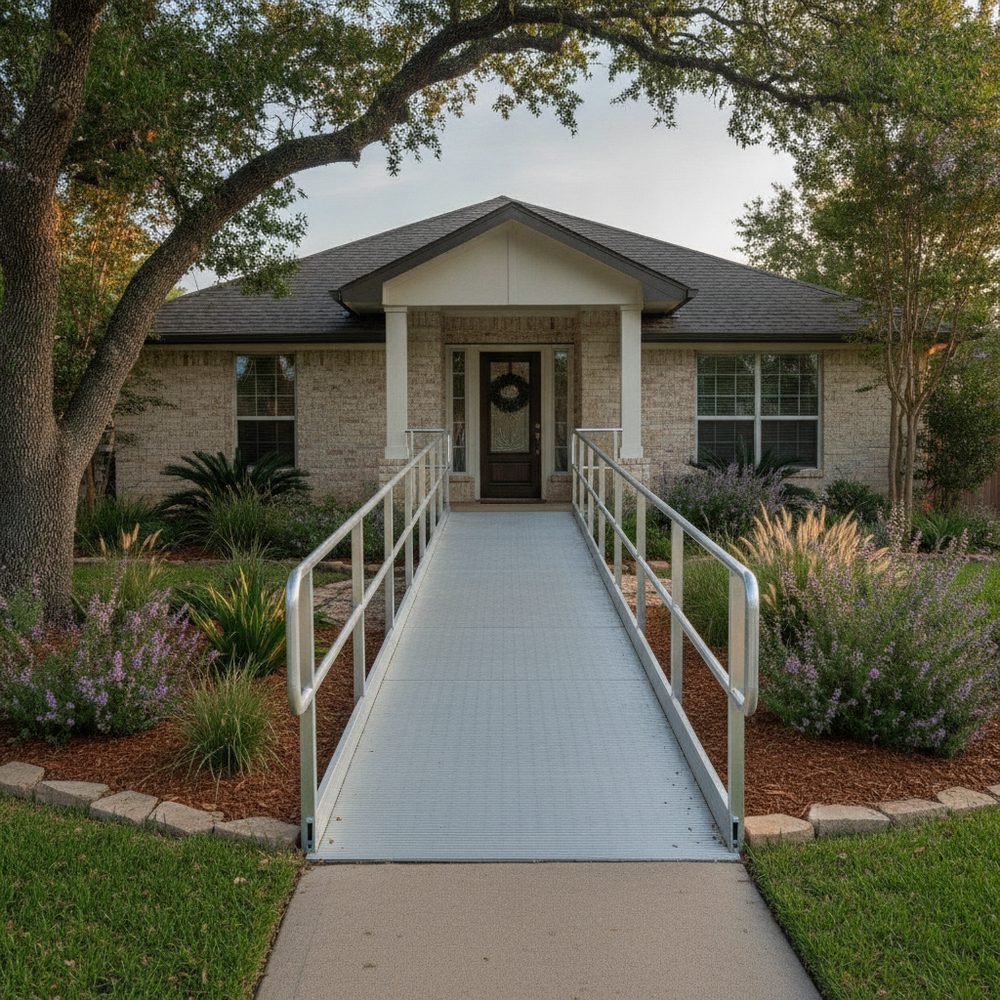
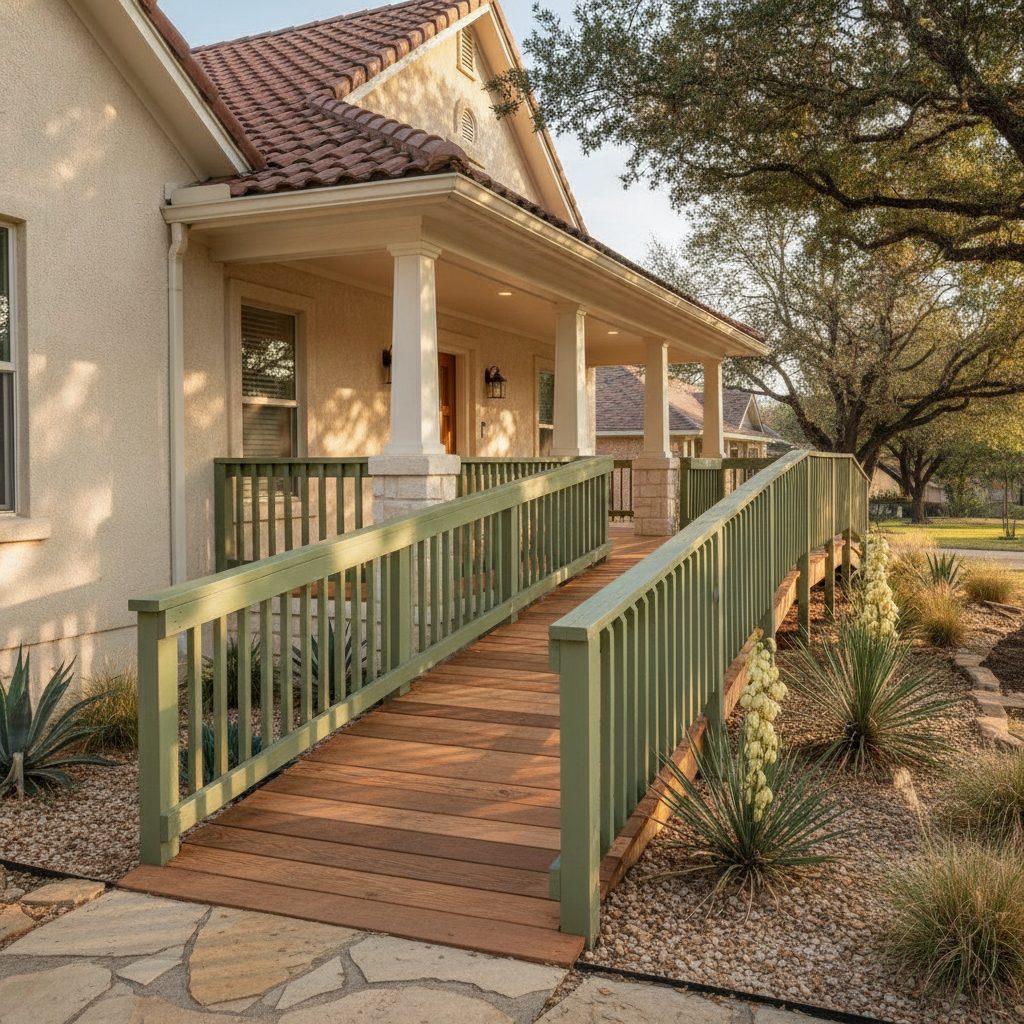
This is the defining challenge of Canyon Lake accessibility work. Many properties drop 3 to 8 feet or more from the street to the front entry, and others have terraced yards that step down toward the water. A code-compliant ramp requires no more than 1 inch of rise for every 12 inches of run — which means a 36-inch rise needs a 36-foot ramp run, minimum. On a sloped Canyon Lake lot, that often means a switchback design, a longer run along the side of the home, or — in some cases — a combination of grading, steps with platform lifts, and ramp sections. We assess each property individually and design a solution that's safe, compliant, and as unobtrusive as possible visually.
Foundation and Wall Construction
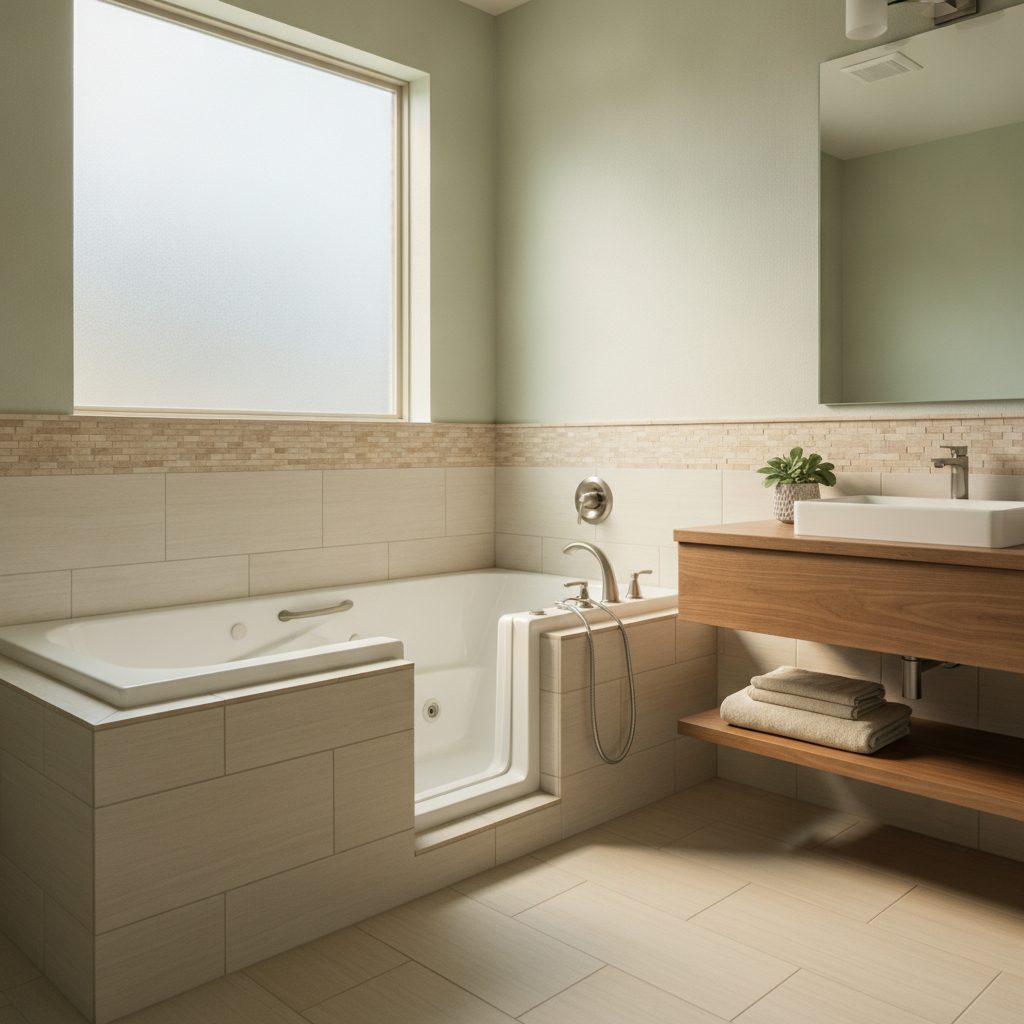
Older Canyon Lake homes — especially those originally built as weekend cabins — sometimes have pier-and-beam foundations or non-standard wall framing that affects where and how we anchor grab bars and structural elements. Our team assesses your specific construction before recommending or installing anything. We never cut corners on anchoring: a grab bar that pulls out of the wall is worse than no grab bar at all.