

Walk-In Tub vs Tub-to-Shower Conversion
Walk-in tub vs tub-to-shower conversion — two popular upgrades, one important question: which one actually makes your home safer? Here is an honest, side-by-side look from a home-accessibility team that installs both in Austin and Central Texas.
By Drew Chandler — Home Accessibility & Project Coordination · Updated 2026-08-01
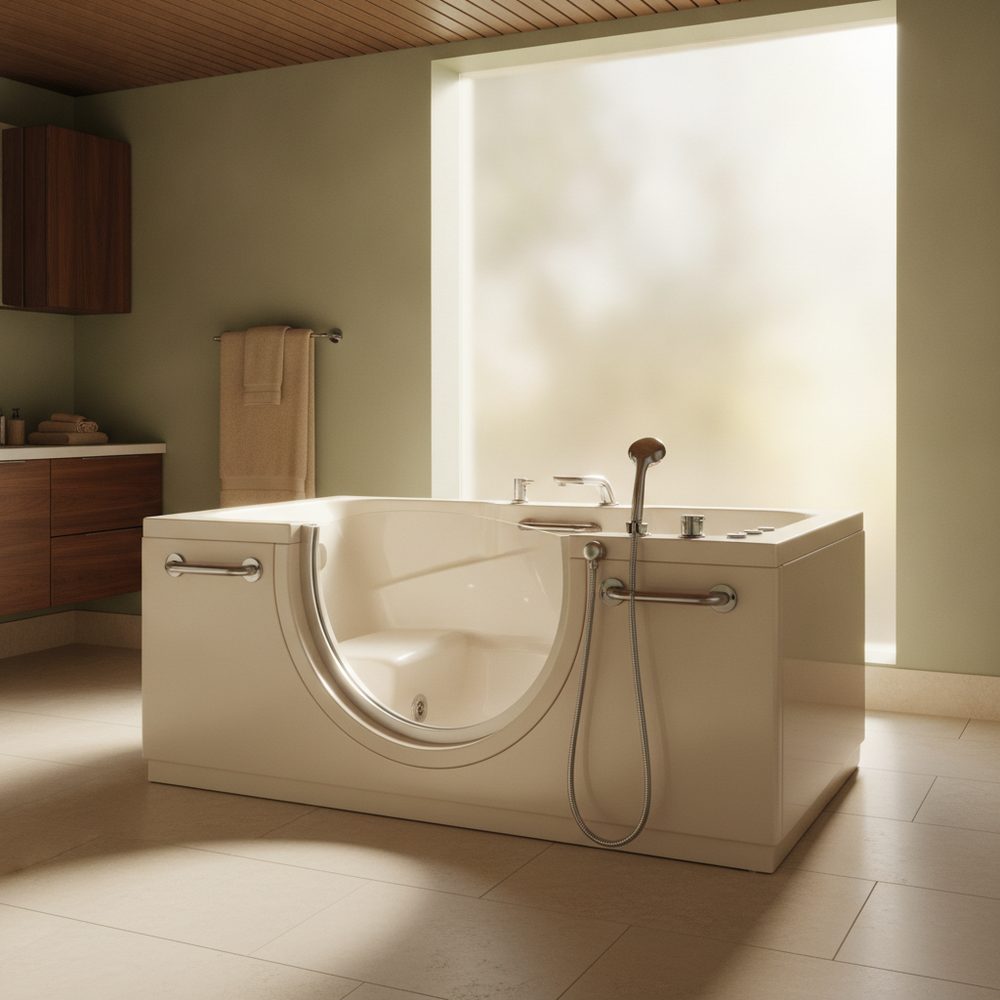
For most people aging in place, a curbless tub-to-shower conversion is the safer everyday choice. It removes the tub wall entirely, so there is nothing to step over, and it lets you exit the shower without sitting in cooling water while the tub drains. A walk-in tub can be the right answer if therapeutic soaking is a genuine medical need — but it still requires stepping over a low sill and waiting in the tub while it drains, which introduces its own fall risks. The best fit depends on your specific mobility, balance, and daily routine. A free in-home assessment helps you decide with confidence.
Why the Bathtub Is the Most Dangerous Spot in the Home
A CDC-published national study found an estimated 234,094 nonfatal bathroom injuries among people 15 and older were treated in U.S. emergency departments in 2008 — 81% caused by falls — and injuries in and around the tub or shower were the single largest share of those, more common than injuries near the toilet. Bathing, showering, or getting in or out of the tub or shower was the activity underway in 37% of all bathroom injuries, the single most common cause. (Source: CDC, Nonfatal Bathroom Injuries Among Persons Aged ≥15 Years, MMWR 2011) The combination of wet surfaces, high step-over heights (a standard tub wall sits roughly 14–16 inches off the floor), and the awkward twist needed to lower yourself in or out makes bathing a genuine daily risk for anyone dealing with reduced balance or joint stiffness.
Families across the Austin metro, the Hill Country, and Central Texas come to us with the same worry: Mom or Dad is still bathing independently, but one wrong step could change everything. Both walk-in tubs and tub-to-shower conversions address that risk. They just do it differently — and neither is perfect for every person or every home.
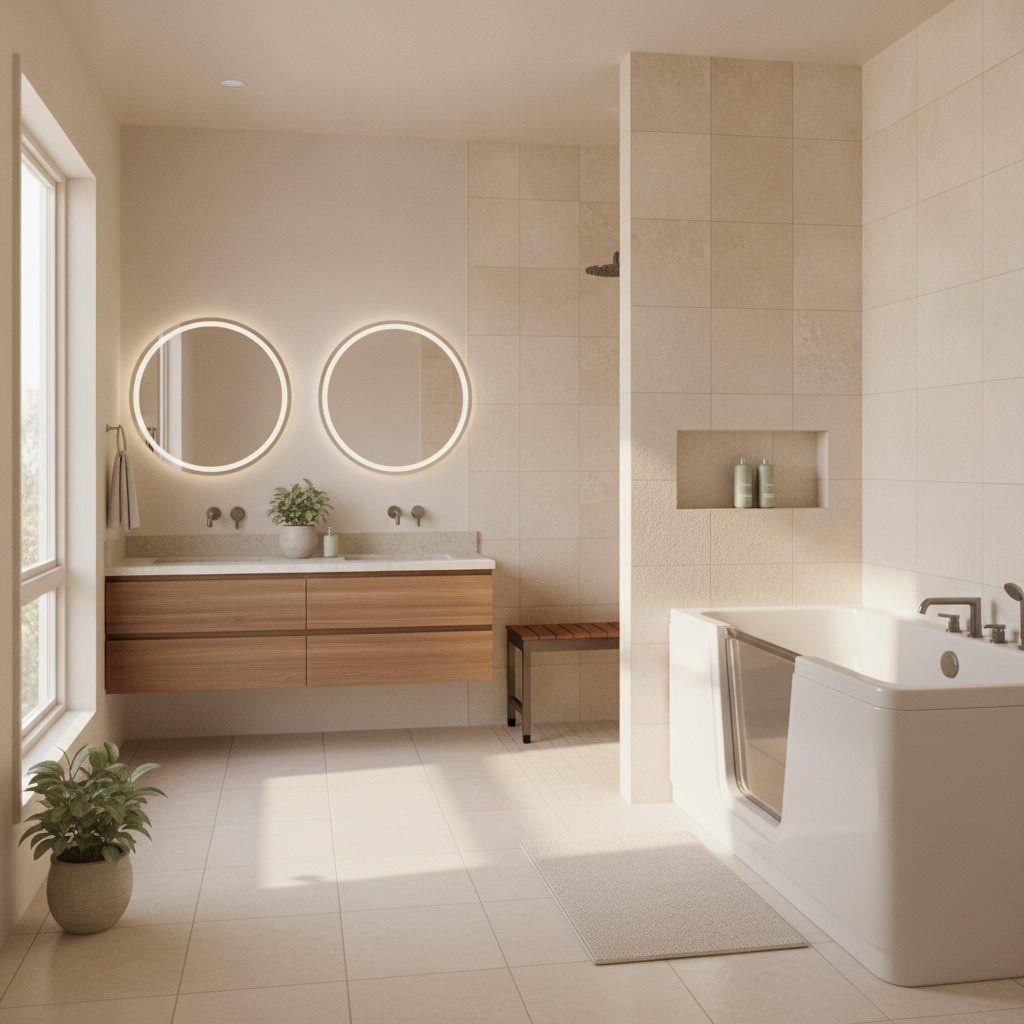
Walk-In Tubs: What They Are and How They Work
A walk-in tub looks like a standard bathtub but has a watertight door in the side wall. You open the door, step over a low threshold (typically 2–4 inches, much lower than a standard tub wall), sit down on a built-in seat, close the door, and then fill the tub. When you are done, you drain the water first, wait for the tub to empty — which can take several minutes — then open the door and step out.
Walk-in tub features to know
- Built-in seat: You enter and exit from a seated position rather than lowering yourself to the tub floor.
- Low threshold: Still requires a step, though much lower than a conventional tub.
- Door that opens inward: Standard on most models to maintain the water seal. Some newer models offer outward-swinging or bi-fold doors.
- Optional hydrotherapy jets: Air jets or water jets for pain relief, circulation, or arthritis relief.
- Optional heated surfaces: Seat and backrest warming features on premium models.
- Anti-slip floor texture: Most models include a textured floor surface.
Interested in walk-in tub installation in Central Texas? Our team can show you models suited to your space and needs.
Walk-in tub drawbacks to consider honestly
- You must enter before filling. This means you sit in an empty tub while it fills — which takes time and can be cold in Central Texas winters.
- You must drain before exiting. Sitting wet while the water drains takes additional time and can lead to chilling, especially for older adults who are more sensitive to temperature changes.
- The door is still a step. Even at 2–4 inches, that threshold is a fall risk for someone with significant balance challenges.
- Limited caregiver access. If a caregiver needs to assist, the closed door makes it harder to help safely.
- Resale considerations. Walk-in tubs appeal to a narrow buyer pool and may reduce the home's broad market appeal.
Tub-to-Shower Conversions: What They Are and How They Work
A tub-to-shower conversion removes your existing bathtub and replaces the space with a dedicated shower. For aging-in-place purposes, we almost always build a curbless (zero-threshold) shower — meaning the floor transitions flat from the bathroom tile to the shower floor, with no lip or raised edge whatsoever.
The drain is set at the low point of a gently sloped shower floor, and water flows away without any barrier. You simply walk in. With a fold-down or fold-up shower bench, you can bathe seated without ever standing over a slippery surface.
Learn more about our walk-in shower and tub-to-shower conversion services in Austin and Central Texas.
Key features of an aging-in-place shower conversion
- Zero threshold: No step to cross — the floor is continuous from bathroom to shower.
- Grab bars: Mounted into studs at entry, seated bathing position, and near the showerhead — not clip-on bars, but properly anchored, weight-bearing hardware.
- Fold-down shower bench: Folds against the wall when not in use; supports up to 250–350 lbs on quality models.
- Handheld showerhead: Allows bathing from a seated position and easier rinsing.
- Thermostatic or pressure-balance valve: Prevents scalding from sudden temperature shifts.
- Anti-slip floor surface: Small-format tile with more grout lines, or a textured surface system — both provide traction when wet.
- Wide entry: We can often widen the shower opening or offset the door to allow walker or wheelchair access.
Tub-to-shower conversion considerations
- No soaking: If your parent truly loves a long soak — and finds it genuinely therapeutic — a shower does not replace that.
- Plumbing relocation: Depending on the layout, we may need to move drain lines, which adds to project scope and cost.
- One bathtub remaining: If this is the home's only tub, some buyers with young children may prefer a tub. Worth discussing if resale is a near-term priority.
Side-by-Side Comparison
| Factor | Walk-In Tub | Curbless Shower Conversion |
|---|---|---|
| Entry threshold | Low sill (typically 2–4 in.) — still a step | Zero threshold — fully flat entry |
| Daily fall risk | Reduced vs. standard tub; sill + wet exit still present risk | Lowest — no step, seated bathing option |
| Wheelchair access | Not wheelchair-accessible (requires transfer and walking) | Roll-in ready with proper sizing and layout |
| Caregiver assistance | Door limits caregiver access during bathing | Open layout makes assistance straightforward |
| Therapeutic soaking | Yes — soaking, jets, and heated surfaces available | No — shower only |
| Time per bath | Longer — must wait to fill and drain before exiting | Shorter — in and out at your pace |
| Cold-exposure risk | Present — sitting in cooling water while draining | Minimal with properly positioned showerhead |
| Maintenance | Jets require regular flushing/cleaning; door seal needs inspection | Standard tile or surface cleaning; drain clearing |
| Typical Central Texas cost range | Varies by features & tub size — request a free quote | Varies by size & materials — see cost guide or request a quote |
| Resale appeal | Narrow — appeals to buyers who specifically want soaking | Broad — contemporary look, works for all ages |
| Best for | Those who need therapeutic soaking and can manage the sill and door | Most aging-in-place situations; wheelchair users; anyone prioritizing fall prevention |
Cost figures represent typical Central Texas ranges — a free in-home assessment gives an exact quote tailored to your bathroom.
Who Is a Walk-In Tub Right For?
A walk-in tub makes sense when:
- Soaking provides genuine medical benefit — for arthritis, fibromyalgia, circulation issues, or muscle pain — and a shower does not meet that need.
- The person can step over a 2–4 inch sill without significant fall risk, with the support of grab bars.
- They bathe independently and do not need hands-on caregiver assistance during bathing.
- Hot water therapy or hydrotherapy jets are specifically wanted or recommended by a physician or occupational therapist.
- The bathroom is large enough to accommodate the tub's footprint (walk-in tubs are typically wider and longer than standard alcove tubs).
person-centered note: We partner with occupational therapists across the Austin area and Hill Country who can assess your parent's or loved one's specific mobility and balance. A formal OT evaluation is often the clearest way to determine which bathing option is truly safest for a given person. Ask us for a referral during your free assessment.
Who Is a Tub-to-Shower Conversion Right For?
A curbless walk-in shower is the right choice when:
- Fall prevention is the top priority and eliminating every step matters.
- The person uses a walker, rollator, or wheelchair — or may in the future.
- A caregiver assists with bathing and needs open, unobstructed access.
- The bathroom is on the smaller side and a walk-in tub's footprint would not fit comfortably.
- Speed and simplicity of the daily bathing routine matter — no waiting to fill or drain.
- Resale value and broader market appeal are considerations for the near future.
- The person is fine with showering and has no specific medical need for soaking.
For the vast majority of aging-in-place clients we meet in Dripping Springs, Austin, Georgetown, Wimberley, New Braunfels, and the surrounding Hill Country, a thoughtfully designed curbless shower with a bench and grab bars is the answer that makes their bathroom feel confident and comfortable — not clinical.
A Note on Funding for Either Option
Original Medicare generally does not cover walk-in tubs, tub-to-shower conversions, grab bars, or other home modifications. Some Medicare Advantage plans offer limited home-safety benefits — verify your specific plan.
Veterans may qualify for the VA Home Improvements and Structural Alterations (HISA) grant for medically necessary modifications — verify current VA figures directly with the VA.
Texas Medicaid STAR+PLUS HCBS waiver can cover Minor Home Modifications for eligible enrollees.
We help clients and their families navigate paperwork for these programs. We provide general guidance only; this is not medical, legal, or financial advice — verify current program details with the relevant agency.
For a broader look at what programs may apply to your situation, see our Central Texas home modification cost guide, which covers typical project ranges and funding options in plain language.
Our Process: How We Help You Decide
-
Free In-Home Assessment
A home-accessibility specialist visits your home, walks every room with you (or your adult child), and evaluates the specific risks in your current bathroom. We look at your mobility, the bathroom's layout and plumbing, and what your daily routine looks like — not just what a brochure recommends.
-
Plain-Language Options
We present your options clearly — walk-in tub, curbless shower conversion, or sometimes a combination of modifications — with honest pros and cons for your situation. No pressure, no upsell. We want you to make the right choice for your home, not our revenue.
-
Exact Quote
We provide a written, itemized quote. Central Texas ranges vary too much by home layout, materials, and plumbing to quote reliably over the phone — in-person is always more accurate and fairer to you.
-
Written responsibilities and support
Your written scope identifies the work, the responsible provider and the applicable warranty terms. Live Oak installations and separately contracted partner work have separate responsibilities. Ask us to explain these before work begins.
-
Follow-Up
We check in after the project is complete. If anything needs adjustment, we come back. Family-owned businesses depend on referrals — we do not finish and disappear.
Ready to compare options in your home? Call or text us at (512) 222-8834, or schedule your free in-home safety assessment online. We serve Austin, Dripping Springs, Georgetown, San Marcos, Wimberley, New Braunfels, Marble Falls, Kerrville, and surrounding Central Texas communities.
Frequently Asked Questions
Which is safer: a walk-in tub or a walk-in shower?
For most people, a curbless walk-in shower is safer day-to-day. It eliminates the high step over a tub wall and the need to sit in water until it drains. A walk-in tub still requires stepping over a low sill and sitting wet while the tub drains, which adds cold-exposure and fall risk. That said, if soaking is medically important for pain or circulation, a walk-in tub with a built-in seat and grab bars can be a reasonable choice. The best option depends on your specific mobility, balance, and health needs — a free in-home assessment helps identify which fits your situation.
How much does a tub-to-shower conversion cost in Central Texas?
Typical Central Texas ranges vary based on size, materials, and whether plumbing relocation is needed. A basic tub-to-shower conversion with a prefabricated unit generally runs less than a fully custom tiled curbless shower. A free in-home assessment from Live Oak Home Access gives you an exact quote for your bathroom. See our cost guide for broader ranges across all accessibility modifications.
How much does a walk-in tub cost in Central Texas?
Walk-in tub costs in Central Texas vary with tub features (jets, heated surfaces, chromotherapy), tub size, and the complexity of installation. Entry-level soaking models cost considerably less than hydrotherapy versions with many features. Because every bathroom is different, a free in-home assessment is the most accurate way to get a real number for your home.
Will Medicare pay for a walk-in tub or shower conversion?
Original Medicare generally does not cover walk-in tubs, tub-to-shower conversions, grab bars, or other home modifications. Some Medicare Advantage plans offer limited home-safety benefits — check your specific plan. Veterans may qualify for the VA HISA grant for medically necessary modifications; verify current VA figures directly with the VA. Texas Medicaid STAR+PLUS HCBS waiver can cover Minor Home Modifications for eligible enrollees. We help with paperwork; this is not medical, legal, or financial advice — verify current program details with the relevant agency.
Can I use a walk-in tub or shower if I use a wheelchair?
A curbless roll-in shower is almost always the better choice for wheelchair users. It allows a wheelchair or shower wheelchair to roll directly in with no threshold to cross. Walk-in tubs require the user to transfer and walk in, which is difficult for those who depend on a wheelchair. Our home-accessibility team designs roll-in showers with the turning radius, bench placement, and grab bar layout that works for your chair and your bathroom.
Does a walk-in tub help with resale value?
Walk-in tubs appeal to a specific buyer — someone who needs or wants soaking therapy — and can actually reduce appeal for buyers who prefer a standard shower. A curbless walk-in shower tends to have broader market appeal because it looks contemporary and functions well for people of all ages and abilities. If resale is a priority, most real estate and remodeling professionals consider a walk-in shower the stronger investment. That said, your comfort and safety at home matter most. We are happy to talk through both options during a free in-home visit.
How long does a tub-to-shower conversion take?
Most tub-to-shower conversions in Central Texas homes take one to three days depending on the scope of work — whether we are installing a prefabricated unit or building a fully custom tiled curbless shower, and whether any plumbing relocation is needed. We protect your floors throughout the project and clean up every day before we leave.
What is the difference between a curbless shower and a walk-in shower?
A walk-in shower simply means a shower without a tub — you walk in rather than climbing over a tub wall. A curbless shower (also called a zero-threshold or roll-in shower) is a specific type of walk-in shower that has no raised lip or step at all: the floor transitions flat from the bathroom to the shower floor. Curbless designs are the safest option for people with limited mobility or balance challenges, and they are required for wheelchair access. All of our walk-in shower conversions for aging-in-place clients use a curbless design.
Not sure how you’d pay for it? Find out in minutes — free
Complete the free Funding Check for a preliminary list of programs to review and official sources. Review the preliminary map with our team before making a funding or construction decision. Each program decides eligibility and approval; there is no obligation to buy.
Not Sure Which Option Is Right for Your Home?
Let a home-accessibility specialist visit your bathroom, walk through both options with you, and give you an exact written quote — no pressure, no obligation. We serve Austin, Dripping Springs, Georgetown, San Marcos, Wimberley, New Braunfels, Marble Falls, Kerrville, and all of Central Texas.
Clear Written Scope · home-accessibility · Family-Owned · Serving Central Texas